Showing posts with label Adventure Design. Show all posts

Sunday, July 10, 2022

Dimesional Travel Using Classic Arduin rpg & Dragon Magazine For OSR Campaigns

 Last night's zombie game sessions got my copy of the three Arduin rpg books back in my hands again. The nexus gates of Arduin brought back this quote from the classic Retro Rpg blog; "These ‘gates’ provide a supernatural exchange where all possibilities meld and merge, allowing anything to happen. Opening into temporal, spatial, and dimensional locations, the gates lead to places in dreams, uncharted jungle worlds, or steams of time not yet seen…”  From What Is The Nexus? an Arduin World Of Khaas web supplement by Emperor’s Choice Games & Miniatures


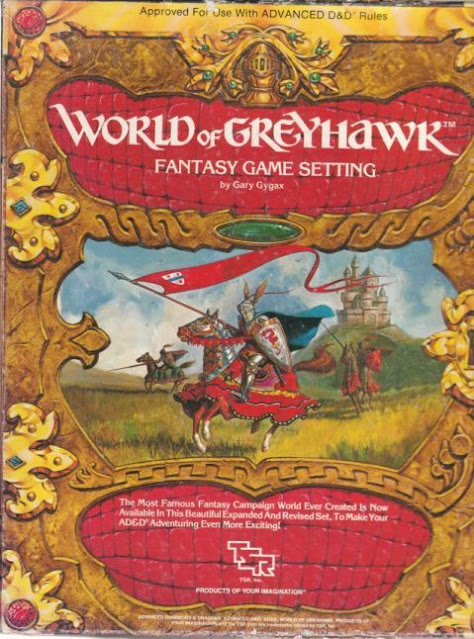
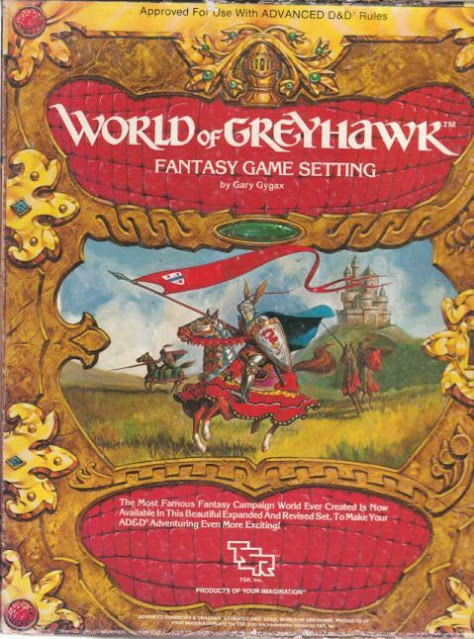
This puts one back into the mindset of Gamma Terra and the classic crossover of Gamma World & Dungeons & Dragons back in the Eighties. When player's PC's gated in & out of many of the classic old school campaign settings. This was especially true of Gamma World. Where a campaign of AD&D or D&D players PC's might begin on Greyhawk & then gate into Gamma Terra. Dragon magazine issue #108 has the classic Mutant Manual II.  


And this goes back into some of the dungeon design issues that we've covered long before on this blog especially back in November of last year here.  Gamma Terra's pocket populations of mutants could guard far more then what the PC's are expecting. Vaults, ruins, etc. could actually be controls for a Nexus gate system that leads to other points of the multiverse. In other words these gates might have been added into by dimensional alien empires have discovered these ancient gate systems in eons past. 


Tuesday, January 18, 2022

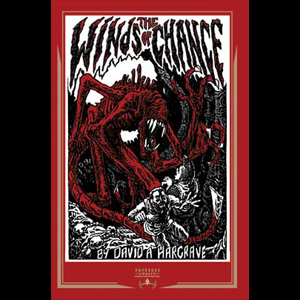
The Good, The Bad, & The Assassins - Commentary On Using the 'Arduin Grimoire Trilogy' book Winds of Chance (Arduin Grimoire volume 8) from Emperor's Choice For Dungeon & Adventure Design With

  The 'Arduin Grimoire Trilogy' book Winds of Chance (Arduin Grimoire volume 8) from Emperor's Choice is an odd supplement in a way because it concentrates on some of the seedier sides of Dave Hargrave's Arduin rpg setting. 

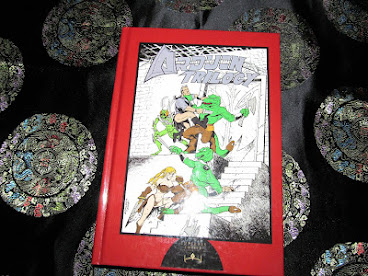
This blog entry is gonna pick right up from here. The 'Arduin Grimoire Trilogy' book Winds of Chance aside from having a kick ass cover of the Ripley. Has an extensive deep dive into Arduin's underworld with the infamous Black Lotus Society, Thieves & Assassins Guilds, because this is some of the backbone of the criminial elements within the campaign setting. And we are talking both high end murder and asssasination here. There's very little sugar coating when it comes across  because all of this crime filters down into the street gangs of Arduin. 


Now I've said it before but let me say it again, Dave Hargrave has with  the 'Arduin Grimoire Trilogy' book created an Arduin campaign setting centric tool box. And the rest of his Arduin books expand upon & enhance this tool kit & modular rpg nature of his creation. Crime on Arduin is serious business. Because the gangs & criminal organizations of  of Arduin are  very dangerous. These gangs move across vast arrays of the multiverse through high end renagade wizards who are in the guilds employ. 
This is made clear within the Arduin books time & again. Because the thieves & asssasins guilds were clearly on the path to expanding their terrorities. And they were more then willing to do this through agents, thieves, and assasssins. This goes back into the the highest ranks of the royals a subject  also covered in Winds of Change.  
Back when my uncle was runnning Arduin there was a very nasty war between Greyhawk's thieves guilds & Arduin with the Assassins guilds on both sides picking up very lucritive contracts on both sides. This would lead into our facing down the slavers from A1 -4 Scourge of the Slave Lords by Gary Gygax but at the time we didn't know it?! 


Winds of Change does its job very well taking the three major Arduin Grimoire Trilogy books & expanding once again the scope & breath of Dave Hargrave's vision. 

Tuesday, December 7, 2021

'Where The Monsters Dwell' - Commentary On Using the 'Arduin Grimoire Trilogy' book from Emperor's Choice For Mega Monster & Demon Creation For Your Old School Campaigns

 The other day I was thumbing through Vaults of the Weaver the Dave Hargrave's module collection & these modules have within them details about the Cult of Cthulhu on Arduin. These cults operate underground. 

Emperor's Choice does some excellent reprints of Dave Hargrave's old school materials 


These cults operate with their own twisted nightmare agendas  & they operate with impunity on Arduin. These secret cults have operated for thousands of years & they deal with  dungeon monster NPC's. Cults such as the mythos maintain these various dungeons across Arduin. And when  a godbound has appeared these cults go into overdrive. Godbound make excellent sacrifices to the mythos parasite gods. 


And what does any of this have to do with  Cha'alt?! Let's put this on point, the black pyramid calls these cults to itself on Cha'alt from across dimensions. The dungeons of Cha'alt have been created in the massive wars that once ravaged the sands of the planet. Cha'alt marks time until the great Old Ones become far more active. Could the black pyramid have its own unearthly agenda? Absolutely it could!


The black pyramids have their own agendas & perhaps the godbound are seen as nothing more then spiritual batteries. Spiritual batteries that could awaken the Great Old Ones before the stars come right!?! There are gigantic monsters that stalk across the wastelands of Arduin but are these horrors under the control of the gods of Chaos. These gods of Chaos & Lovecraftian horror often smuggle these monsters to a wide variety of worlds including Greyhawk. Crossing over from Arduin to Greyhawk is as simple as finding a portal in a dungeon on Arduin & stepping into Greyhawk. This is something that Hargrave makes really clear within the 'Arduin Grimoire Trilogy' book & a subject that carried over unto his section on his own version of the multiverse. 


The breeding point for these horrors?! The black pyramids & their dungeons on Cha'alt! This profane location & planet is the perfect breeding point for monsters & demons beyond the ken of men! 

Tuesday, November 23, 2021

Commentary On Using the 'Arduin Grimoire Trilogy' book from Emperor's Choice For Dungeon & Adventure Creation For Your Old School Campaigns

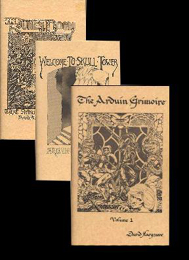
 So for the past three or four weeks I've been listening to Erik Tanard waffle on about Emperor's Choice's  the 'Arduin Grimoire Trilogy' book & other Arduin books. So glad to see Emperor's Choice rise from the ashes & inject some needed old school reprint goodness back into the OSR & the hobby scene. Now I've had this book going back to someplace around 2008 or so. Anyhow everyone talks about the PC options, alternative abilities, Hargrave's brilliance, how he was ahead of his time (he definitely was). But does anyone ever talk about the 'Arduin Grimoire Trilogy' book dungeon & mega dungeon resources?! 

On page 384 Hargrave lays out his dungeon design philosophy stating that 60% of his dungeon rooms are empty of monsters & treasure. But these rooms each have some interesting feature or redeeming little tid bit to keep the players interested. Another thing that stressed is making the dungeon your own as the dungeon master. 
On pages 388 through 390 there are the random dungeon encounter charts by dungeon level from 1st  going all of the way up through 12th. And there's some rather nasty little gems of monsters. Finally we get into a page on generating random, fogs, mists, etc. on pages 392. 
And then a section on hirelings. Who are they, how to hire them, rates, etc. Hirelings are some of the most important NPC's for the party to take with em down into the dungeon. 


Dave Hargrave has with  the 'Arduin Grimoire Trilogy' book created an Arduin campaign setting centric tool box. And this is solidly done because it creates a workable old school tool box for the DM to dip into as needed. And the more one reads the more one comes away with at least several thoughts on creating adventures on Arduin. Today Arduin is one of those old school gaming wells that I frequently find myself returning to whist other dungeon masters & OSR bloggers seem to burn out. The sheer volume of old school weirdness & wonderfulness keeps the experience of gaming fresh for me. If you don't like something then drop it or move on! Dave Hargrave wasn't an easy character to define but he did gaming on his own terms!
  The 'Arduin Grimoire Trilogy' book has so many resources in it for adventure & dungeon creation that its hard to pick simply one or more areas to read. But I will say this, 'Arduin lives quite nicely in my own & other's  imagination today. 


Dave Hargrave defined his adventures in his own terms & made them live to his players through sheer imagination & DMing. And its this 'try what I'm putting on the table for you & your players' attitude that separates Hargrave from others of his ilk at the time when the three other brown books were written. 
Mr.Hargrave knew his stuff & even though this an alternative set of rule books there was enough different that Arduin has or had its own unique feel. And it was something to see Arduin mentioned in the same breath as Greyhawk. Crossing over from Arduin to Greyhawk is as simple as finding a portal in a dungeon on Arduin & stepping into Greyhawk. This is something that Hargrave makes really clear within the 'Arduin Grimoire Trilogy' book & a subject that carried over unto his section on his own version of the multiverse. 


What makes the 'Arduin Grimoire Trilogy' book unique is how its purposely been edited to make it far easier to look up & use Dave Hargrave's contents as an actual tool kit for adventure & dungeon design. The originals still cause many folks issues. But there's more then enough to create the unique 'Bloody, Bloody. Arduin' flavor & uniqueness for both the dungeons & adventures of your own making. 

Monday, March 9, 2020

The Quest For New Players - A Common Sense Approach To Old School & OSR Gaming

Getting new players is never an easy quest. The fact that this morning I had a 'gentleman' over the weekend email me & insist he had to meet with me on Monday wasn't a problem. A no show though that's a problem. My day job is beyond busy & that's the way it is. Its also the way I like it!  Rather then go completely haywire about the situation I decided to make the most out of it & share some insights.


Here are some of the actual ways that I've found new players for table top rpg's & some common sense guidelines:

  1. Ask around to people you might know in the hobby locally. And keep in contact through local folks in the hobby. There always people open to talk about & get into games. 
  2. Wear a tee shirt advertising your favorite games such as AS&SH or the like. Right now with shows like Critical Role & many other venues of table top role playing  games we're right now living in the Golden Age of Dungeons & Dragons. Yeah its sometimes that easy to start a game. 
  3. Run on line, this has been a very curious option where I've watched Venger Satanis & many other dungeon masters run OSR game sessions on line. Some of the research that I've done offers up some places a couple of options according to this Reddit ; "Roll20 it has a virtual battle map which you may not need but it covers a lot of other things as well. Chat program, has video and voice, can roll dice (of a huge variety), Characters have journals and sheets, you can play music to the party, share handouts, and more.Obsidian Portal will handle all the paper work. Has a wiki, character sheets, maps, and more. Want a timeline? Every session add an entry to the adventure log (blog). Keep a wiki with all the NPCs and small details that come up. All pages can have GM only parts.Pair your chatting program (or Roll20) with Obsidian portal, grab some dice, and your ready to go."
  4. Take an add out in the local classified's news paper. Yes there are still newspapers around & you'd be surprised at how often this works. 
  5. Approach your local library about starting an OSR or Dungeons & Dragons club. Yes this is another option & one I'll be pursuing this option in the near future. 
  6. Get a game going in the local hobby shop. Yeah in 2020 the old habits die hard & since about 90% of hobby shops in my area are card collecting & playing pits this isn't an option for me as a dungeon master. Your area may yet have a dedicated board game or table top rpg hobby space. Get to know the shops owners.
  7. Go to a local rpg table top hobby conventions. By this I mean conventions dedicated to the hobby. 
  8. Run Dungeons & Dragons in any of its incarnations regardless of the BS that the OSR feeds you this game is gonna get you the widest number of players. The brand recognition is still strong  among both new gamers & old schoolers.

From here on out there are two options to start a game in my opinion. Public game campaigns which is done at hobby shops & libraries as well as the like in which these are run exactly like convention events. In other words anyone can show up, the adventure has a beginning,middle, and open end. And private games which are run within your home, at a friend's house,etc.
Both options require the one thing that no one ever tells you about, interview your new players. Yes there are all kinds of freaks, weirdos, etc. out in the world today. Having a bit of an interview will give you the heads up & keep you & yours well safe. Talking with the new player is going to give your exceptions of the campaign & those of the player. Avoiding any unnecessary drama over the long haul. 


Do yourself as a DM a favor & don't plan an elaborate play session for the first outing. Plan this adventure like a ground up convention style game session or mini campaign with four to six sessions max or two or three to begin with. The keep it simple out of the gate approach
with a minimalist adventure the rules won't scare off new players & will have returns to the table top. 

Tuesday, June 5, 2018

Twelve Rules For Pulp & Gonzo Elements In Old School Campaigns

There's been a bit of a misnomer about my reputation among certain corners of the OSR. I've been called everything from an 'Old School Renegade' to an 'Old School Resurrectionist' to that 'old fool'. Well, perhaps I'm a bit of all of those things & more. The commentary I'm offering seems to be scoffed at in some corners. So what. I'm here for the OSR readers &  subscribers but more over the players as well.


The fact is that sometimes implying gonzo & crazy adventure elements are far better then just dropping giant robots & other pulp elements into an adventure. Now I've been talking about Arduin for the better part of a week. For over a year of near constant weekend & weekly play we'd worked are PC's in the shape that the campaign setting called for.
The dungeon master needs to spin the gonzo elements out where & when they're needed X1 Isle of Dread is a perfect example of master class pacing of the Expert B/X set's elements as both a teaching add for the novice dungeon master & an hard lesson for the players. David CookTom Moldvay 
take the dungeon master through all of the necessary steps to get the PC's hooked into the action on the isle with an emotional investment in the fate of the whole place. Dave Hargrave did similar in his own home campaigns from what I understand & the fact is that just the right amount of world building comes into play here. Hands off lets the dungeon master have the players build the campaign on their own. 
  1.  Expand the horizons of the player's PC's by offering opportunities for growth vs death. This is something that has to do not with leveling up but letting the player think his way out of a trap or dangerous situation. 
  2. Plan with pulp adventure elements in mind but don't over think an adventure. If you find yourself scripting the adventure instead of running it then you might be over thinking it. 
  3. History & real world elements off set the nature of the fantastic or crazy. Ruined devices or set pieces wouldn't destroy a campaign. 
  4. Take things in stride & let the players take the lead even if its into a TPK. Always roll up new characters 
  5. Adventurers have always been there before the PC's & their dead always use others before to add depth to the campaign world setting. Plus you can loot the bodies. 
  6. Keep the adventure simple at first the players will complicate it as they go on. 
  7. Play styles are going to differ so you can expect lots of lapses & even possible set back. Offer only hints & clues with artifacts, devices, and tricks never take a hand. This is the player's game. 
  8. Death always lurks around the corner in Pulp games an NPC death is something unexpected and will frighten players.
  9. Expand on the setting only as needed. Keep the adventure setting simple & easily designed. 
  10. Horror,death, and destruction are going to happen expect them. Court them and use them as tools for the game but not gregariously. 
  11. Let the players grow & the PC's level as needed.
  12. Take the pulp elements in stride and don't over explain anything let the players fill in the gaps.

Saturday, June 2, 2018

Twelve Rules For Adapting Classic Old School Modules for Campaign Play

Sometimes one stumbles into a blog topic, today I was down at my local Half Priced Books with some friends. I walked over to the rpg section which was quite full of treasures from the old school. Watching two twenty something year old guys mooning at a classic  T1 Temple of Elemental Evil by Gary Gygax with Frank Mentzer. They were intimidated by three things the lethality of the module, the size & scale of T1, & the campaign commitment. I sat these guys down & we went over bit by bit how to take on this beast.
They bought the only copy of T1 there after we had talked & gone over the module together.


These guidelines & not hard & fast rules folks. Born out of common sense & forged over the years from dealing with three generations of players here. Dungeons & Dragons is over forty years old & sometimes common sense is short supply.

  1. There are no sacred cows at the table, the module doesn't matter what the title is or whatever is yours & you as the dungeon master need to read & adapt it to suit the needs of the table. 
  2. Reread, reread  the module. Don't memorize it, instead take fast, quick notes, about. Form your own opinions about it. Trust your gut instincts & modify it as necessary for the players. 
  3. Have fun with the adventure as the dungeon master. Read, chuckle, put it aside, & don't be intimidated by it. 
  4. Your needs & not the publisher's or writer's. This means that you have total control over what is done with this product at your table. Total control and no one can over ride the players or your control. Adapt, destroy, and alter as necessary. 
  5. Change, gut, use, these three apply to monsters, treasure, events, etc. to fit the campaign or one shot event. 
  6. Take your time running the adventure. Stretch the game sessions out to the players needs but not your own. Let the play find its own level. Stop worrying you've got this.
  7. Tournament play means exactly what it implies and the above guidelines allow you to modify as necessary,
  8. "But this isn't how Gary or  XYZ ran or did this?!" , the play of the adventure may alter the adventure that the authors or designers never saw. Go with it. 
  9. Your allowed to make mistakes & learn from them. 
  10. Classic adventures are classic for a reason. Its alright to run them as is if that's your preference as a dungeon master. 
  11. Expect PC death frequently & roll with it. The players will be thankful for it. It builds better players & campaigns. 
  12. Classic modules are merely guidelines themselves & you & your players are the makers of the products of your imagination. You own this now take it in the direction that you want & need.


    Next time more Arduin, OSR weirdness, & more Sword & Sorcery horror coming up.

Friday, June 1, 2018

Twelve Quick Rules for Using Old School Appendix N or Pulp Novel Resources For Adventure Design


Long ago in the mists of time there were very few published worlds & dungeon masters were forces to rely on their imaginations. The works of classic authors were often the target from H.G.Wells, JulesVerne, & the long plethora of Pulp era writers. These  fields are still fertile& even more so because players don't read the works they claim to. Often when mining a book or novella for ideas there are several guide lines I follow for campaign & world development: 
  1. Start with the interesting bits that appeal to you as if you were a player. What is going to grab the players attention? 
  2. The devil is in the details & there no rules for changing them or ustulizing them as needed. The fact is that twisting details of a novel or story to fit your campaign is the norm. The dungeon master has only one audience to please or kill as the whim of the game dictates 
  3. Keeps the notes fast & loose so that you can change on the fly if necessary. 
  4. Dungeon & adventure locations should be mined to the fullest and melded as needed by the adventure. 
  5. Stock these locations as you would any other dungeon. Use common sense or don't depending upon the situation.
  6. Think outside of the usual conventions for interesting adventure locations including classic literature ie Frankenstein's Castle or the like 
  7. Never let others dictate your whims as a reader of fantasy or fiction, if 'so & so' doesn't like XYZ author then all of the better because they're not going to recognize novel or elements as needed. 
  8. Steal but alter as necessary and often adventure locations can change or morph as ideas take you when your writing your adventures. 
  9. Know which buttons to push & which not to. Get to know your players & use common sense as a dungeon master. 
  10. Do what's comfortable but don't be afraid to push classic old school products or OSR material in a direction that the author didn't expect or intend. 
  11. Pick & choose your favorite authors but mix it up a little so that you can keep the players guessing if their literate. 
  12. Keep the material simple or complex as the playing audience can handle the adventure material. This comes under the 'get to know' your players heading.

Monday, May 9, 2016

Meditations On Hacking West End Games Star Wars Strike Force Shantipole Adventure By Ken Rolston For Your Old School Campaigns


 Introduction 


Coming out in '88 this classic Star Wars Rpg adventure for the  first edition Star Wars rpg puts the PC's right into the classic era cross hairs for a daring mission into the lions den. The blurb on the back of the adventure takes the PC's right into heat of the Rebellion against the Empire;

"Battle Imperial starfighters in the vastness of space, chase deadly probots through asteroid storms, and go up against a heavily-armed escort frigate in this explosive full-length Star Wars adventure.
In the Roche Asteroid Field, a secret Rebel project nears completion. Headed by Commander Ackbar, the Shantipole project has developed a powerful new starfighter for the Alliance arsenal.
But first, Shantipole must be safely escorted back to Alliance High Command. That's where you and your team come in. With a borrowed freighter, sealed holodisc orders, and a good blaster at your side, your ship emerges from hyperspace -- right in the middle of a TIE/LN starfighter patrol!
And they told you this was going to be a routine mission..."
So I know what your thinking what the hell does this have to do with OSR gaming and why is taking a classic West End  Star Wars adventure and talking about hacking it. Well its not to what you might think. This classic adventure by Ken Rolston brings the action of the Star Wars game right to the players door step and goes that extra push over the edge. This classic adventure allows the PC's to meet an iconic Star Wars character as an NPC and play a critical off camera role in the midst of the background of the movies all of the while a key piece of the Rebellion Alliance military hard wear keeps flying and out of the Empire's clutches.
When we begin looking below the surface of the adventure into the story line, background of the adventure plus the way things begin to play out we begin to see a pattern in the adventure's foundation.


Background, Plugging In Elements, and Sword & Sorcery  Because of the military aspect of  Strike Force Shantipole it is very easy to take certain plot and adventure elements and transport these over to your favorite retroclone or old school adventure. The thing to remember is the PC's are playing a central roll in the continuation of one of the most iconic fighters in the Rebel Alliance


Take the action, the background elements, and other messy plot point details and transport this adventure over into your favorite retroclone or AD&D 1st edition sword and sorcery style campaigns and suddenly the utility of the adventure is extended by years. Certain adventures are iconic and easily recognized and work on a number of levels for science fantasy play. Take these adventure elements and transport the whole plot lock, stock and barrel into a sword and sorcery game or campaign and things can get very interesting.


Sealed orders, the fate of a kingdom,incredibly dangerous encounters on the enemies home territory, and other surprises make this style of hack easy and incredibly fun.Throw in some iconic NPC's for various encounters and you have a mini campaign going soon enough.


According to Wookiepedia:"Research Station Shantipole was an asteroid in the Roche system. It was primarily staffed by Verpine. After the Battle of Yavin, the asteroid was the site of the Shantipole Project, in which Slayn & Korpil worked with Commander Gial Ackbar to develop the B-wing/E starfighter." So here's how this might translate over to a sword and sorcery campaign setting:

  1. The isolated island was the site of an ancient military ship yard within a hidden base. 
  2. A special fast pirate ship is being used by renegade forces and only PC''s are aware of it after their aboard and on their way into the jaws of death. 
  3. Add in some pulpy minor monsters, a subplot, a bit of magickal mythology and legend not to mention the HP Lovecraft or Robert Howard connection and your almost ready to go. 
  4. A cult or other faction could help to move the plot along. 
  5. Rival forces for opposition to the PC's could make for some much needed melee and combat. 
  6. Many of the over the top aspects of the Empire are perfect for keeping PC's on their toes with warlord tactics and management ideas. The Empire becomes a world level power and faction with the added twist of the ancient dark magic/religion being behind the rise of the power in your world.
  7. The added dungeon crawling aspects of this adventure give just that much more of a classic D&D style dungeon crawl. 
  8. Many of the plot pieces feel as though they belong to a classic fantasy film or WW II war picture many of these exciting elements can be worked into other plots. Don't try and rush this adventure there are a lot of moving parts and pieces. 
  9. There's something about this adventure where the PC's are a party of rag tag fighters that works on a number of levels. 
  10. This adventure could be adapted to other classic rpg genres such as a post apocalyptic adventure. I used this one as a part of a space going Mutant Future/Buck Rogers style crossover. This style of adventure with altered ships, details, and some backgrounds allowed it to work great at the time.

     Breaking Up The Beast, Parts, Pieces, And More


    As I said this is a beast of an adventure that has a plot that could be used potentially for lots of applications. This is especially true of using Star Wars adventures for WWII movie style role playing a fact that I've used several times in modern style role playing games such as Top Secret and others. The secret to this style of role playing is the movie serial. Breaking up the plot of a complicated or long  range module allows the DM and players to emulate the pulp style reels of the 1930's.


    The serial approach allows the PC's to take center stage on a number of levels and allows the DM to break up the action of the adventure to be stretched into a mini campaign with the PC's playing their vital parts. This approach works especially well in a wartime style scenario or as a sword and planet or science fantasy vehicle. The Fifty Five film The Damn Busters really solidifies the idea for such an exciting adventure with a
    military theme.


     Once again we're going back to the roots of Star Wars in this case the Damn Busters a 1955 UK film that George Lucas used as inspiration for many of the Death Star sequences and trench run camera angles.Many of the action military films of yesteryear not only provide a touch stone with the roots of the film but also provide a clue for getting the most out of adventures that players might not be expecting.