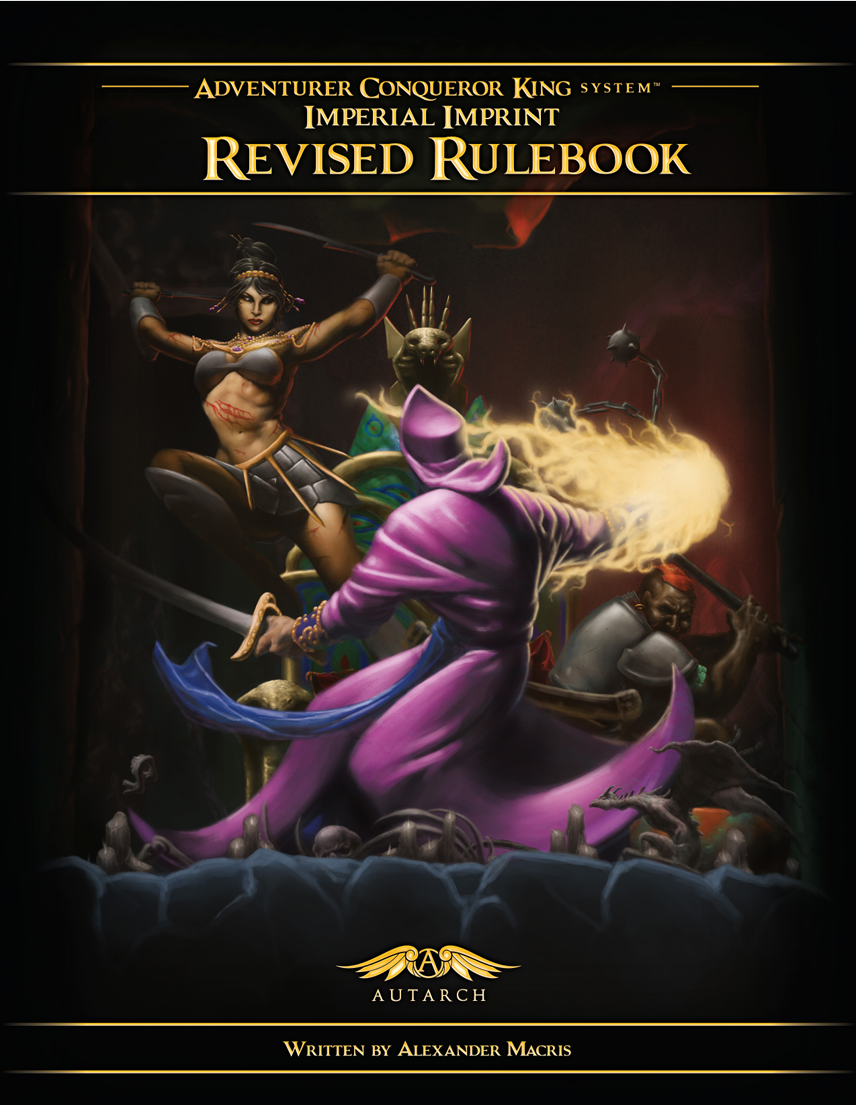
Showing posts with label Old School Retro-clone rpg systems. Show all posts

Tuesday, May 19, 2026

Further Meditations on The B2 Keep On The Borderland Adventure Module By Gary Gygax & ACKS II Rpg


Gary Gygax’s 1979 module B2: The Keep on the Borderlands is the foundational text of the sandbox campaign. Ostensibly written as an introductory adventure for the D&D Basic Set, it functions under the hood as a masterclass in dynamic world-building, spatial economics, and emergent play. This is going to pick right up from OSR Commentary - Adapting AX2: Secrets of the Nethercity For ACKS II rpg & Barrows & Borderlands Rpg


When peeled back from its nostalgic veneer, B2 reveals a sophisticated, highly volatile ecosystem built on factional tension, economic vulnerability, and a stark, unromantic view of the frontier.

1. The Geometry of Isolation: The Keep's Spatial Design

The Keep itself is not just a safe zone; it is a pressurized container of Law perched precariously on the lip of Chaos. Its architectural layout dictates the social dynamics of the campaign.

  • The Outer Bailey (The Buffer Zone): This is where commerce, transience, and vulnerability live. The tavern, the inn, and the stables form a economic engine designed to extract coin from travelers and mercenaries. It is deliberately exposed; if the outer wall falls, the outer bailey is sacrificed.

  • The Inner Bailey (The High-Trust Engine): Separated by a secondary massive gatehouse, the inner bailey houses the Keep’s actual power structure—the Castellan, the guard garrison, and the chapel. This physical segregation tells low-level PCs exactly where they stand: they are tools of the state, kept in the courtyard until they prove their utility.

The Structural Flaw: The Keep is a logistical nightmare if cut off. It relies entirely on a single, vulnerable trade road to the civilized lowlands. A clever Game Master realizes that the human factions here are just as desperate for stability as the monsters in the caves are for territory.

2. The Caves of Chaos as a Fractured Megadungeon

The Caves of Chaos are frequently misread as a "monster zoo"—a random assortment of humanoids crammed into a single ravine. In practice, they represent a highly sophisticated, multi-tiered tribal ecosystem.

The ravine acts as a literal corporate ladder of absolute savagery, arranged vertically and deeply divided by evolutionary and cultural hatreds.

                  [ The Dark Chapel ] (The True Threat)
                           ^
                           |
            [ Minotaur ] <---> [ Gnolls ]
                 ^                 ^
                 |                 |
     [ Orcs: Tribe A ] <=======> [ Orcs: Tribe B ]
            ^                              ^
            |                              |
     [ Goblins ] <-------------------> [ Hobgoblins ]
            ^
            |
     [ Kobolds ] (The Bottom Feeders)

The Geopolitical Fault Lines

  • The Grudge Match: The two rival Orc tribes (Tribe A and Tribe B) hate each other with a fury that rivals their hatred for the humans. If PCs clear one side, they actively grant a regional monopoly to the other.

  • The Underclass Wars: The Kobolds at the bottom of the ravine are food and slave labor for the Goblins and Hobgoblins. They are structurally incapable of winning a prolonged war, making them prime candidates for PC exploitation, bribery, or asymmetrical warfare.

  • The Hidden Hegemony: At the apex sits the Shrine of Evil Chaos. The cultists are not merely cave dwellers; they are the ideological puppet masters using religious terror and wealth distribution to prevent the humanoids from tearing each other apart before they can overwhelm the Keep.

3. The Undercurrent of Borderland Economics

Gold and silver drive B2 more than any grand narrative of good versus evil. The module operates on a strict zero-sum economy that forces players into grey moral choices.

FactionPrimary Economic EngineVulnerability
The KeepTrade taxes, mercenary exploitation, state supply linesTotal reliance on external grain/goods shipments
The HumanoidsRaiding trade caravans, internecine tributeAbsolute lack of agriculture or sustainable production
The CultistsPlunder, ideological funding from external dark powersExposed supply lines if the ravine is blockaded

The Realities of Gygaxian GP

Because early editions tie character advancement (XP) directly to recovered treasure, the game mechanics force PCs to act as state-sanctioned looters. Every gold piece stripped from a goblin chief’s chest is capital removed from the local wilderness economy and injected into the Keep’s merchant lane.

This creates an inevitable cycle: looting causes tribal desperation, desperation causes increased raids on the trade roads, and increased raids force the Castellan to fund more desperate expeditions into the ravine.

4. The Hidden Catalyst: The Wilderness

The wilderness hexes between the Keep and the Caves are not empty transit space; they are a ticking clock.

  • The Mad Hermit: A textbook example of borderland madness. He represents the fate of those who reject both the rigid martial law of the Keep and the tribal collectivism of the Caves.

  • The Lizardmen: Positioned in the southern fens, they are a neutral wildcard. They do not care about the geopolitical war between the Castellan and the Cultists, but their territorial integrity controls access to the riverways.

5. Turning the Key: Running B2 with Modern Intent

To elevate B2 from a classic crawl into a dynamic, shifting campaign, a Game Master needs to treat the module as a loaded spring. The moment the PCs arrive, the balance of power should begin to crack.

  • Weaponize the Factions: Let the humanoids negotiate. A dying goblin chief should gladly offer the PCs a map of the Hobgoblin complex in exchange for his tribe’s survival.

  • Track the Logistical Fallout: If the players kill the Kobolds, who moves into their caves? The Orcs? Or does the gelatinous cube wander out of the depths because its food supply has dried up?

  • The Keep is Not Safe: The cult has agents inside the walls. The lonely, isolated mercenaries in the Outer Bailey are prime targets for subversion, bribery, and religious radicalization.


To bridge the foundational sandbox of B2: The Keep on the Borderlands with the granular, socio-economic engine of Adventurer Conqueror King System II (ACKS II) is to transform a classic introductory dungeon crawl into a highly volatile, politically charged borderland simulation.

Where early editions of D&D treat the wealth and manpower of the Keep as static background flavor, ACKS II mechanics demand that every coin looted, every mercenary hired, and every goblin tribe displaced ripples directly through the local market economy and domain stability.

1. The Keep as a Class VI Market (The Borderland Frontier)

In ACKS II, settlements are categorized by Market Classes, which dictate the availability of goods, the maximum value of items that can be sold, and the weekly pool of mercenary talent.

The Keep functions as a Class VI Market (a tiny frontier settlement or fortified outpost).

[ Civilized Lowlands ] ===(Trade Income: High)===> 
[ The Keep: Class VI Market ] ===(Target)===> 
[ The Caves of Chaos ]
                                                            |
                                                   
[ Frontier Garrison ]
                                               
(High Upkeep / Low Tax Base)

The Economic Squeeze

  • The Monthly Supply Limit: A Class VI market has a limited monthly supply of standard equipment and a very low threshold for purchasing monster treasure. If the PCs return from the Caves of Chaos with a hoard worth $3,000\text{ gp}$, they cannot simply liquidate it at the local provisioner. The local merchants lack the liquidity. The PCs must either pay a hefty premium to ship the loot to a larger city downriver, barter directly with the Castellan for land/favors, or accidentally crash the local frontier economy by causing hyperinflation.

  • Mercenary Scarcity: The Outer Bailey tavern is not an infinite well of meat-shields. In ACKS II, a Class VI market might only generate $1\text{d}4$ Light Infantry or Bowmen candidates per month. If the players treat their retainers as disposable trap-detectors in the ravine, they will rapidly find themselves entirely alone; word spreads that expeditions with the PCs are a death sentence, drying up the local labor pool.

2. The Caves of Chaos as a Fragmented Beastman Domain

Instead of seeing the Caves as a random assortment of monster lairs, ACKS II views the ravine through the lens of Beastman Tribes and Domains. The Caves represent an active, competitive ecosystem of overlapping tribal territories fighting for the same limited resources.

Using the ACKS II domain management logic, the Ravine can be mapped out as an unstable web of tribal dynamics:

TribeACKS II Unit TypesPrimary ResourceTerritorial Strategy
KoboldsLight Infantry (Slingers), SkirmishersNumbers & Hidden TunnelsSubservient to the Hobgoblins; focus on ambush and defense.
GoblinsWolf Riders, Light InfantryMobility & Warg BreedingAttempting to secure the Wilderness Road to intercept commerce.
Orcs (Tribe A/B)Heavy Infantry, Medium InfantryMartial Might & RaidingLocked in a blood feud over hunting grounds and tribute.
HobgoblinsPhalanx Infantry, Heavy InfantryDiscipline & Tactical FortificationsFunctions as the military backbone of the ravine, policing lower tribes.
The CultCultists, Dark Pluralists, Anti-ClericsDivine Favor & Unholy RelicsThe shadow government extracting tribute to fund a chaotic node.

The Chieftain's Balance Sheet

In ACKS II, monster chieftains must pay their troops and feed their populations just like human rulers. The humanoids in the Caves are starving; the frontier is over-populated.

  • If the PCs cut off the Goblins’ access to the trade road, the Goblin Chief faces a resource crisis. To prevent a mutiny, he must either launch a desperate, suicidal assault on the Keep’s supply lines or invade the neighboring Orc territory to seize their grain stores.

  • The players can actively use Subversion and Bribery (ACKS II Criminal Syndicate rules) to fund one faction, turning a dungeon crawl into a proxy war.

3. The Castellan’s Dilemma: Garrison Costs vs. Revenue

The Castellan is not just an NPC who gives out quests; he is a Domain Ruler operating on a razor-thin financial margin.

The Keep maintains a formidable garrison: dozens of heavy footmen, crossbowmen, and cavalry. In ACKS II, the monthly upkeep for a professional military force of this size vastly outstrips the tax revenue generated by the tiny civilian population in the Outer Bailey.

+-------------------------------------------------------+
|  THE CASTELLAN'S MONTHLY LEDGER                       |
+-------------------------------------------------------+
|  REVENUE:                                             |
|    - Outer Bailey Market Taxes:              +150 gp  |
|    - Royal Borderland Subsidy:             +1,200 gp  |
+-------------------------------------------------------+
|  EXPENSES:                                            |
|    - Garrison Wages & Rations:             -1,800 gp  |
|    - Wall Fortification Maintenance:         -250 gp  |
+-------------------------------------------------------+
|  NET MONTHLY DEFICIT:                        -700 gp  |
+-------------------------------------------------------+

The Strategic Consequence

The Castellan is hemorrhaging money. The royal court in the civilized interior will only subsidize this outpost for so long before deciding the borderland is a lost cause.

  • The PC as an Investment: This financial pressure is exactly why the Castellan tolerates rowdy, heavily armed adventurers operating out of his tavern. He needs the PCs to clear the caves because his official garrison cannot leave the walls without risking the Keep falling to an immediate siege.

  • The Taxman Cometh: Once the PCs start clearing sections of the Caves, the Castellan will assert legal claim over the recovered territory under crown law. He will demand a tithing or treasure tax (typically 10% to 20%) on all bullion brought through the Keep's gates to balance his ledger, creating a natural point of friction between the party and the law.

4. The Campaign Endgame: Securing the Borderlands

The ultimate synergy between B2 and ACKS II emerges when the party survives to mid-levels ($4\text{th}–6\text{th}$ level) and shifts from mere delvers to domain rulers. The module naturally transitions from a dungeon crawl into a Borderland Clearing Simulation.

[ Level 1-3: Tactical Crawl ] ---> [ Level 4-5: Factional Sabotage ] --->
 [ Level 6+: Domain Construction ]
  - Loot for XP                      - Fund Tribal Wars                     - Clear Hexes
  - Hire Local Retainers             - Intercept Cultist Supply Lines        - Build Borderland Strongholds

From Ravine to Barony

Under ACKS II rules, to claim a domain, the wilderness hexes must be systematically "cleared" of monsters.

  1. The Purge: The Caves of Chaos cannot simply be left half-empty. If the Cult is destroyed but the Hobgoblins remain, the domain is still considered wild. The players must systematically root out or subjugate every faction.

  2. Vassalizing the Humanoids: An enterprising Lawful or Neutral PC might choose not to exterminate the remaining humanoids, but to force them into vassalage. Using the ACKS II Monstrous Vassals mechanics, a defeated Orc chieftain can swear an oath to a player character, turning the remaining cave complexes into a fortified, subterranean march that guards the PC’s new border territory.

  3. The Shadow War: If the players build a stronghold nearby, they must contend with the Unholy Node generated by the Shrine of Evil Chaos. Until the shrine is desecrated and ritually purified by a high-level cleric, it will continuously attract new chaotic monsters to the region, increasing the local Savage Encounter rate and suppressing civilian migration to the players' new lands.

5. Master Faction Conflict Table for the Borderlands

This d20 table represents the regional friction between the Keep's supply lines, the competitive humanoid tribes, and the machinations of the Cult, processed through ACKS II wilderness movement mechanics.

d20Encounter TypeFactions InvolvedEconomic / Tactical Consequence
1-2Tribal SkirmishOrcs (Tribe A) vs. GoblinsThe Orcs are executing a punitive raid on a goblin foraging party. Left alone, one side is wiped out, shifting the balance of power in the ravine.
3-4Cultist Supply InterdictionThe Cult vs. Keep CaravanHooded acolytes and undead skeletons are ambushing an iron shipment meant for the Keep's blacksmith. Success increases the cost of weapons at the Keep by 20%.
5-6The Desperate LevyKeep Garrison vs. WildernessA squad of Keep footmen is forcibly press-ganging local laborers and travelers into service to replace recent casualties. PCs must negotiate or see their preferred torchbearers drafted.
7-8Tribute CollectionHobgoblins vs. KoboldsA disciplined phalanx of Hobgoblins is extracting food and copper from a terrified pack of Kobolds. If the PCs protect the Kobolds, they earn a fragile, low-trust informant network within the Caves.
9-10The Mad Hermit’s Market DisruptorThe Hermit vs. Local EcosystemThe Mad Hermit has trapped a live monster (e.g., a Owlbear or Gray Ooze) and is attempting to steer it toward the Keep’s trade road to drive away "the civilized insects."
11-12Mercenary DesertionDisgruntled Guards vs. The Law$1\text{d}6$ heavy infantrymen have deserted the Keep due to back-pay issues and are turning to highway robbery. They possess inside knowledge of the Keep’s watch schedules.
13-14The Fens EncroachmentLizardmen vs. Orcs (Tribe B)Lizardmen from the southern swamp have traveled upriver to contest a watering hole used by the Orcs. The area is a chaotic three-way hunting ground.
15-16Underground RailroadCultist Infiltrators vs. The KeepA seemingly mundane merchant wagon leaving the Keep is caught smuggling sacrificial victims or silver out to the Shrine under the cover of night.
17-18The Warg RunGoblin Cavalry vs. Trade CaravanGoblin wolf riders are performing a hit-and-run raid on a luxury trade caravan. Wealthy merchants from the lowlands are trapped; saving them offers a direct line to Class I market financing.
19-20Total Ravine MobilizationThe Cult’s VanguardA unified force of Orcs, Goblins, and Cultists are marching to establish a forward siege camp outside the Keep's valley. The campaign sandbox has escalated to an open war footing.

Monday, September 2, 2024

Commentary On The Fiend Folio For 1st Edition Advanced Dungeons and Dragons For Your Old School Science Fantasy Campaigns

 When it comes to the Advanced Dungeons & Dragons first edition Fiend Folio there's something to remember about the monsters. These monsters have a completely different feel then thier American counterparts. This makes them ideal to use with Science Fantasy rpg's. Now I've talked extensively about the Fiend Folio on this blog. 


This is especially true of the OSR based games such as Stars Without Number where the creatures & monsters can easily be stand in's for alien creatures and monsters. 
Stars Without Numbers the number of systems that have been isolated by the Scream is numerous. We have no idea what or whom has been trapped. 
This makes perfect fodder for having the humanoid tribal  races that are in the Fiend Folio to the forgotten & fallen remains of alien empires. 


This goes back to something I said in my commentary on the Fiend Folio; "The Fiend Folio is the forgotten Monster Manual and the monsters are easily discounted and overlooked. This makes perfect fodder for the DM to use them and reintroduce his or her players to the terrors of them. " Stars Without Numbers has numerous space dungeons & ruins baked right into the campaign background. And this same principle applies to the undead of the Fiend Folio; "This book has some great undead in it and they are so great to add into post apocalyptic games such as Mutant Future and Gamma World as needed for alien planets and ruins. Yeah, there's a bit of science fantasy over flow with Fiend Folio and the gonzo factor is such an appeal here" 

Coming across a Vodyandi on a waterworld someplace in the interstellar back of beyond would cause quite a stir among players. The Fiend Folio has mostly been forgotten by today's fifth edition & Shadowdark crowd. This makes it a perfect suppliment to get a second life as a post apocalpytic or Science Fantasy supplement. 


Let's go back to our friend the Voyanoi here for a second. These alien horrors could have been bred by Interstellar Kua Toa and used as muscle, guardians, etc. The empire dies off and this leaves the ancient guards still going about thier duties. There's plenty of  life in the Fiend Folio as a supplement for OSR Science Fiction games. This brings up the encounter tables in the back of the Fiend Folio; "Fantastic encounter tables in the back of the book make dungeon and wildness setting design and monster placement a snap. This keeps things moving at the table during play. "
And this is doubly so for OSR Science Fiction games where a fast moving encounter can mean the difference between a successful game campaign and the loss of a player. 


Monday, November 28, 2022

Six Low Level Cosmic Ritual Spells For Your Old School Campaigns From The Pages of The Ritual Mundix

 Ritual magick can be cast by anyone with the right tools and ritual space. These spells have been inscribed within the Ritual Mundix one of the corner stone books of cosmic magick. The Ritual Mundix was first transcribed from several wandering star vistors over 10,000 years ago to the shores of our reality. These are the first stepping stones for star clerics & instellar magi who are just starting out on their journey into the mists of magick itself. 


Here then are six low level cosmic rituals ripped from the pages of   the Ritual Mundix itself.  The Ritual Mundix itself has been added to by many generations of  star clerics & instellar magi. Care should be taken by those whose minds have not been strengthed by the mind excercises taught too lower tier   star clerics & instellar magi by their masters. 
Anyone gazing into the cosmic blackness & gulfs  blackness of the pages of The Ritual Mundix without the proper percautions such as a mental home anchor point in this reality. May lose 1d4 points of wisdom or intelligence. 


Skyn of Survival  - Spell Ritual Level:1 level star cleric/ 2nd level interstellar magi 

Casting time: 1 hour/30 minutes after practice for 1d6 months 

Range: self 

Duration: until dismissed 

Description: The caster cloaks himself in the reality of his local space time, atmosphere, and zone of dimensionality. This spell is one of the first that the caster learns from the pages of the Ritual Mundix. It allows one to survive on alien planets & within the vaccum of space by using self regenerating other dimensional elements outside of normal space time mimicing the caster's own. It can only be dismissed by the caster. 

Gaze Deeply Between The Stars & Elsewhere - Spell Ritual Level: 1st level star cleric & interstellar magi 

Casting time: 1d6 hours 

Range: Self 

Duration:1d30 minutes 

The caster reaches back into their primitive brains deeply along the ashaktic chain into other realms of past lives until they reach the cosmic foundation of all reality. The caster can now look into any point within the known or unknown universe allowing him or her know local conditions, star systems, primary star conditions, etc. This spell is the basis for all star gazing & travel within  The Ritual Mundix. This spell can be done three times a day when the cosmic winds are right. 

Consume Thy Own Reality - Spell Ritual Level: 1st level star clerics & interstellar magi 

Casting time: 2 hours 

Range: Self 

Duration: Until dismissed 

The caster casts this ritual allowing the need the need for food nor drink to hinder him or her until the spell is dismissed. The caster's body feeds itself on the winds cosmic allowing the caster to forgo food & drink until the ritual is dismissed. But the caster will feel 1d6 phantom pains if exposed to water & food stuffs. These can be overcome with a Wisdom or Intelligence roll or a save vs spells. 

Hyperspace Link - Spell Ritual Level: 1st Level Star Cleric or 1st Level Interstellar magi 

Casting Time: 3 hours 

Range: Self 

Duration:  Instantious 

The caster creates a doorway through subspace with the sheer might of the alien thoughts that invade his mind from Outside. These thoughts are the key & the gate allowing one to instantly traverse the distance between their home planet & one other location. The caster must know the points in reality that they are journeying too & from using two Intelligence or Wisdom rolls. When the last word is dripped from the caster's lips ultra reality enfolds the caster taking him or her to their destination. Preperations must be made before the ritual is cast or their will be consquences upon arrival. This ritual can be cast twice a day. 

As Above So Below  - Spell Ritual Level: 1st Level Star Cleric or 1st Level Interstellar magi 

Casting Time: 2 hours 

Range: Self 

Duration: Instantous/Until Dismissed 

This ritual spell allows the caster to seal himself against any mental or physical forces from Outside if he or she is in normal space or subspace. Entities  which would take avantage of an unprotected vessel journeying across interstellar space such as the caster's body are shielded against with this ritual spell. This ritual spell will last until dismissed or the journey ends. 

Perfectly Preserved  - Spell Ritual Level: 1st Level Star Cleric or 1st Level Interstellar magi 

Casting Time: 1 hours 

Range: Self 

Duration: Instantous/Until Dismissed 

The caster is able to take the cloths on his back & as many items as he can carry with him. These are preserved against the forces cosmic while on his or her interstellar journey. Can be cast seven times a day. 

Thursday, November 18, 2021

Corruption & Chaos Of The Welsh Underworld For Old School Campaigns

 "tseemed to him that the little man had becometransformed into a very beautiful and giganticfigure, with a face that shone like the sun,and opalescent colours gleamed round him.Then music sounded again through the quietevening air, and Fionn saw that Cnu Deireoilwas still before him. But ever after thatFionn believed that the little harper was oneof the children of Dana, and that for somepurpose of his own he had chosen to showhimself to Fionn, and become one of his men. The next day the Fians returned to theirhome on the Hill of Allen, and Cnu Deireoilaccompanied them. Nor would Fionn evermake any journey afterwards without hislittle harper, and in stormy weather, or whenCnu Deireoil grew tired, Fionn would pickhim up and carry him under his mantle; forthe chief of the Fians possessed a very nobleand kindly heart, and always showed a greatgentleness and courtesy to any one smallerand weaker than himself. Cnu Deireoil was a great wonder to thegiant warriors of Fionn, who had never seen"

Heroes of the Dawn 1914


The last couple of days has been incredibly hectic & with work taking a bite into my writing I've had to take my cues where & when I can. So I dug out my notes for one of my most successful Arthurian games. Today we're going to take a moment to talk about Clark Ashton Smith, Irish mythology, & Celtic literature. In this case the connection between Arthurian literature, Welsh mythology, and the possible heart of pure corruption sitting right in the heart of England. The Otherworld is quite distinct from the realm called Annwn. 
 

"In both Welsh and Irish mythologies, the Otherworld was believed to be located either on an island or underneath the earth. In the First Branch of the Mabinogi, it is implied that Annwn is a land within Dyfed, while the context of the Arthurian poem Preiddeu Annwfn suggests an island location. Two other otherworldly feasts that occur in the Second Branch of the Mabinogi are located in Harlech in northwest Wales and on Ynys Gwales in southwest Pembrokeshire."

While I've been planning a sea crawl the fact is that the more I've dipped into the mythological connections of the realm of Annwn.  The more I find deep connections to Arthurian literature & folklore in the Welsh tradition. All of this is a part of the
Four Branches of the Mabinogi.

"The Four Branches of the Mabinogi or Pedair Cainc Y Mabinogi are the earliest prose stories in the literature of Britain. Originally written in Wales in Middle Welsh, but widely available in translations, the Mabinogi is generally agreed to be a single work in four parts, or "Branches." The interrelated tales can be read as mythology, political themes, romances, or magical fantasies. They appeal to a wide range of readers, from young children to the most sophisticated adult. The tales are popular today in book format, as storytelling or theatre performances; they appear in recordings and on film, and continue to inspire many reinterpretations in artwork and modern fiction.
(The Mabinogi needs to be disentangled from The Mabinogion which is the modern name for a larger collection of British/ Welsh mediaeval tales. Published versions of The Mabinogion[1] typically include the Mabinogi. The name The Mabinogion first appears in print 1795,[2] based on a single medieval mistake, but the name then became firmly established in modern usage for the larger collection.)"
The realm of Annwn is a virtual paradise on Earth & a point at which the chaotic realm of Fairyland overlaps over the classical Greco Roman Underworld.
"AnnwnAnnwfn, or Annwfyn (in Middle Welsh/ˈænn/ AnnwvnAnnwynAnnwyfnAnnwvyn, or Annwfyn) was the Otherworld in Welsh mythology. Ruled by Arawn (or, in Arthurian literature, by Gwyn ap Nudd), it was essentially a world of delights and eternal youth where disease was absent and food was ever-abundant. It became identified with the Christian afterlife in paradise (or heaven)."


There are places where the traditions & gonzo weirdness of Welsh legend cross right over into original Dungeons & Dragons ruins & adventure turf . The first Gods, Demigods, & Heroes by  Rob Kuntz, &  James M. Ward came out in 1976 & I've had multiple copies of this classic OD&D. The gods of the Celtic race feature predominantly at the heart of the book. The Celtic material is especially helpful when designing dungeons associated with the twisting and branching subject of Arthurian literature & legend.


The realm of Annwn is a gateway of adventure right in the heart of England's backyard. Here the gods have faded off, the Elves of ancient legend have gone deep into Fairyland and the realm has become much darker as time has rolled on. The ancient king of a dangerous cult & the head of a race of child snatching Elven monsters.
Gwyn ap Nudd the king of the Tylwyth Teg or "fair folk" and ruler of the Welsh OtherworldAnnwn, and whose name means “white son of Nudd”. Described later on as a great warrior with a "blackened face", Gwyn is intimately associated with the otherworld in medieval Welsh literature, and is associated with the international tradition of the Wild Hunt.

This all goes back to the earliest roots of Arthur's predecessors in myth & legend. There are backbone legends that play merry havoc with the occult traditions of the seasons similar to the legends of the Roman god Hades. There is a deep connection to Chaos here and it belies the dangers of Annwn laying just below the realm's surface.

"Annwn plays a reasonably prominent role in the Four Branches of the Mabinogi, a set of four interlinked mythological tales dating from the early medieval period. In the First Branch of the Mabinogi, entitled Pwyll, Prince of Dyfed, the eponymous prince offends Arawn, ruler of Annwn, by baiting his hunting hounds on a stag that Arawn's dogs had brought down. In recompense he exchanges places with Arawn for a year and defeats Arawn's enemy Hafgan, while Arawn rules in his stead in Dyfed. During this year, Pwyll abstains from sleeping with Arawn's wife, earning himself gratitude and eternal friendship from Arawn. On his return, Pwyll becomes known by the title Penn Annwn, "Head (or Ruler) of Annwn." In the Fourth Branch, Arawn is mentioned but does not appear; it is revealed that he sent a gift of otherworldly pigs to Pwyll's son and successor, Pryderi, which ultimately leads to war between Dyfed and Gwynedd.
.
The similarly mythological epic poem Cad Goddeu describes a battle between Gwynedd and the forces of Annwn, led again by Arawn. It is revealed that Amaethon, nephew to Math, king of Gwynedd, stole a bitch, a lapwing and a roebuck from the Otherworld, leading to a war between the two peoples. The denizens of Annwn are depicted as bizarre and hellish creatures; these include a "wide-mawed" beast with a hundred heads and bearing a host beneath the root of its tongue and another under its neck, a hundred-clawed black-groined toad, and a "mottled ridged serpent, with a thousand souls, by their sins, tortured in the holds of its flesh".[3] Gwydion, the Venedotian hero and magician successfully defeats Arawn's army, first by enchanting the trees to rise up and fight and then by guessing the name of the enemy hero Bran, thus winning the battle.
Preiddeu Annwfn, an early medieval poem found in the Book of Taliesin, describes a voyage led by King Arthur to the numerous otherworldy kingdoms within Annwn, either to rescue the prisoner Gweir or to retrieve the cauldron of the Head of Annwn. The narrator of the poem is possibly intended to be Taliesin himself. One line can be interpreted as implying that he received his gift of poetry or speech from a magic cauldron, as Taliesin does in other texts, and Taliesin's name is connected to a similar story in another work.[4] The speaker relates how he journeyed with Arthur and three boatloads of men into Annwfn, but only seven returned. Annwfn is apparently referred to by several names, including "Mound Fortress," "Four-Peaked Fortress," and "Glass Fortress", though it is possible the poet intended these to be distinct places. Within the Mound Fort's walls Gweir, one of the "Three Exalted Prisoners of Britain" known from the Welsh Triads,[5] is imprisoned in chains. The narrator then describes the cauldron of the Chief of Annwn: it is finished with pearl and will not boil a coward's food. Whatever tragedy ultimately killed all but seven of them is not clearly explained. The poem continues with an excoriation of "little men" and monks, who lack various forms of knowledge possessed by the poet."

The connections to the Holy Grail here are obvious within the Welsh mythological tradition. There are still darker connections more modern horror writers especially HP Lovecraft, & Clark Ashton Smith.


Image by Ernest Wallcousins, 1912.

Efnisien sacrifices himself to destroy the cauldron of rebirth.

The Tylwyth Teg are another cross point monster  for the dungeons & realms of Annwn.
"Tylwyth Teg (Middle Welsh for "Fair Family[1] Welsh pronunciation: [ˈtəlwɪθ teːg]) is the most usual term in Wales for the mythological creatures corresponding to the fairy folk of English and Continental folklore and the Irish Aos Sí."

These are child snatching monsters of the highest order & very dangerous horrors to cross in the English & Welsh countryside. But these horrors are very familiar creatures to many dungeon masters & players.
"In later sources the tylwyth teg are described as fair-haired and covet golden-haired human children whom they kidnap, leaving changelings (or "crimbils") in their place. They dance and make fairy rings and they live underground or under the water. They bestow riches on those they favour but these gifts vanish if they are spoken of, and fairy maidens may become the wives of human men.[1] These fairy wives are however still bound by traditional taboos. They must be careful to avoid touching iron or they will vanish back to their realm never to be seen by their husbands again.[4]


As the Bendith y Mamau they are sometimes described as stunted and ugly.[1] They ride horses in fairy rades (processions) and visit houses where bowls of milk are customarily put out for them. A changeling story tells of a woman whose three-year-old son was stolen by the fairies and she was given a threefold instruction by a "cunning man" (magician) on how to get him back. She removed the top from a raw egg and began stirring the contents, and as the changeling watched her do this certain comments he made established his otherworldly identity. She then went to a crossroads at midnight during the full moon and observed a fairy rade in order to confirm that her son was with them. Lastly she obtained a black hen and without plucking it she roasted it over a wood fire until every feather dropped off. The changeling then disappeared and her son was returned to her.[1][5]
According to the folklorist Wirt Sikes the Tylwyth Teg may be divided into five general types: the Ellyllon (elves), the Coblynau (fairies of the mines), the Bwbachod (household fairies similar to brownies), the Gwragedd Annwn (female fairies of the lakes and streams) and the Gwyllion (mountain fairies more akin to hags). The ellyllon (singular ellyll) inhabit groves and valleys and are similar to English elves. Their food consists of toadstools and fairy butter (a type of fungus) and they wear digitalis bell flowers as gloves. They are ruled by Queen Mab and bring prosperity to those they favour.[6]"


Wrapped up in the legends & literature of the Welsh mythology is the origin point for ghouls in Europe for my purposes this is an especially useful adventure point for the Lion & Dragon retro clone system. Here these monsters filtered down with the Romans and before them with various traders to the shores of Britain. These monsters have always been around & have been the servants of the Elves going back to the earliest days of England and the myth of the changling as monster within proves more evidence of this.
"In the Anglo-Scottish border region it was believed that elves (or fairies) lived in "Elf Hills" (or "Fairy Hills"). Along with this belief in supernatural beings was the view that they could spirit away children, and even adults, and take them back to their own world (see Elfhame).[20][21] Often, it was thought, a baby would be snatched and replaced with a simulation of the baby, usually a male adult elf, to be suckled by the mother.[20] The real baby would be treated well by the elves and would grow up to be one of them, where as the changeling baby would be discontented and wearisome.[21] Many herbs, salves and seeds could be used for discovering the fairy-folk and ward off their designs.[21]
In one tale a mother suspected that her baby had been taken and replaced with a changeling, a view that was proven to be correct one day when a neighbour ran into the house shouting "Come here and ye'll se a sight! Yonder's the Fairy Hill a' alowe." To which the elf got up saying "Waes me! What'll come o' me wife and bairns?" and made his way out of the chimney.[20]
At Byerholm near Newcastleton in Liddesdale sometime during the early 19th century, a dwarf called Robert Elliot or Little Hobbie o' The Castleton as he was known, was reputed to be a changeling. When taunted by other boys he would not hesitate to draw his gully (a large knife) and dispatch them, however being that he was woefully short in the legs they usually out-ran him and escaped. He was courageous however and when he heard that his neighbour, the six-foot three-inch (191 cm) William Scott of Kirndean, a sturdy and strong borderer, had slandered his name, he invited the man to his house, took him up the stairs and challenged him to a duel. Scott beat a hasty retreat.[21]
Child ballad 40, The Queen of Elfan's Nourice, depicts the abduction of a new mother, drawing on the folklore of the changelings. Although it is fragmentary, it contains the mother's grief and the Queen of Elfland's promise to return her to her own child if she will nurse the queen's child until it can walk"


The connections between HP Lovecraft's Ghouls & Changlings are fairly obvious especially when we look at his story 'Pickman's Model'.
"There's no use in my trying to tell you what they were like, because the awful, the blasphemous horror, and the unbelievable loathsomeness and moral foetor came from simple touches quite beyond the power of words to classify. There was none of the exotic technique you see in Sidney Sime, none of the trans-Saturnian landscapes and lunar fungi that Clark Ashton Smith uses to freeze the blood. The backgrounds were mostly old churchyards, deep woods, cliffs by the sea, brick tunnels, ancient panelled rooms, or simple vaults of masonry. Copp's Hill Burying Ground, which could not be many blocks away from this very house, was a favourite scene.
The madness and monstrosity lay in the figures in the foreground—for Pickman's morbid art was pre-eminently one of demoniac portraiture. These figures were seldom completely human, but often approached humanity in varying degree. Most of the bodies, while roughly bipedal, had a forward slumping, and a vaguely canine cast. The texture of the majority was a kind of unpleasant rubberiness. Ugh! I can see them now! Their occupations—well, don't ask me to be too precise. They were usually feeding—I won't say on what. They were sometimes shown in groups in cemeteries or underground passages, and often appeared to be in battle over their prey—or rather, their treasure-trove. And what damnable expressiveness Pickman sometimes gave the sightless faces of this charnel booty! Occasionally the things were shown leaping through open windows at night, or squatting on the chests of sleepers, worrying at their throats. One canvas showed a ring of them baying about a hanged witch on Gallows Hill, whose dead face held a close kinship to theirs.
But don't get the idea that it was all this hideous business of theme and setting which struck me faint. I'm not a three-year-old kid, and I'd seen much like this before. It was the faces, Eliot, those accursed faces, that leered and slavered out of the canvas with the very breath of life! By God, man, I verily believe they were alive! That nauseous wizard had waked the fires of hell in pigment, and his brush had been a nightmare-spawning wand. Give me that decanter, Eliot!

There was one thing called 'The Lesson'—Heaven pity me, that I ever saw it! Listen—can you fancy a squatting circle of nameless dog-like things in a churchyard teaching a small child how to feed like themselves? The price of a changeling, I suppose—you know the old myth about how the weird people leave their spawn in cradles in exchange for the human babes they steal. Pickman was showing what happens to those stolen babes—how they grow up—and then I began to see a hideous relationship in the faces of the human and non-human figures. He was, in all his gradations of morbidity between the frankly non-human and the degradedly human, establishing a sardonic linkage and evolution. The dog-things were developed from mortals!"


The chaos cults of the Arthurian  past might have been both a boon & a bane during the time of Arthur with the connections to ghouls both problematic & downright dangerous. The night was prowled by Wild Hunts & worse. Ancient rites & traditions were practiced in the darkest of dungeons. Those of ghoul's blood could cross into the chaos filled dream worlds of Fairyland in the small hours of the night in the most dangerous dungeons.  Perhaps there were other Roman mystery cults of very darkest aspect where the rites of an ancient prince of the dead and undead were remembered. The hellish mindless ghouls of AD&D might well be the lap dogs of cults of the darkest occult stripe.


Ghoul AD&D Monster Manual First Edition

It was when I had read Clark Ashton Smith's Empire of the Necromancers that Orcus came into focus;
"Unbroken before them, through fields devoid of trees and grass, and across the channels of dried-up rivers, there ran the great highway by which travelers had gone formerly betweea Cincor and Tinarath. Here they met no living thing; but soon they came to the skeletons of a horse and its rider, lying full in the road, and wearing still the sumptuous harness and raiment which they had worn in the flesh. And Mmatmuor aad Sodosma paused before the piteous bones, on which no shred of corruption remained; and they smiled evilly at each other.
'The steed shall be yours,' said Mmatmuor, 'since you are a little the elder of us two, and are thus entitled to precedence; and the rider shall serve us both and be the first to acknowledge fealty to us in Cincor.'
Then, in the ashy sand by the wayside, they drew a threefold circle; and standing together at its center, they performed the abominable rites that compel the dead to arise from tranquil nothingness and obey henceforward, in all things, the dark will of the necromancer. Afterward they sprinkled a pinch of magic powder on the nostril-holes of the man and the horse; and the white bones, creaking mournfully, rose up from where they had lain and stood in readiness to serve their masters.
So, as had been agreed between them, Sodosma mounted the skeleton steed and took up the jeweled reins, and rode in an evil mockery of Death on his pale horse; while Mmatmuor trudged on beside him, leaning lightly on an ebon staff; and the skeleton of the man, with its rich raiment flapping loosely, followed behind the two like a servitor."
It doesn't matter your station or social standing the power of undeath & necromancy makes a mockery out of the afterlife. Todd Lockwood's Orcus from 1981's Dragon takes all of the grayness of the demon prince's realm & brings it into sharp focus. There's a certain mocking black magick something about this piece that has the same effect on me as the Ray Harryhausen skeleton fights. You can almost see the movements of the skeletons bringing the poor sacrifice before the bloated demon prince.


The world of the far future is not immune to the mockery & weirdness of the chaos induced fairy glamour of the cousins of the Elves. Clark Ashton Smith's Charnel God, The (1934) goes into the rites & rituals of Mordiggian which are very similar in point of fact to 
Arawn (or, in Arthurian literature, by Gwyn ap Nudd).

"All who die in Zul-Bha-Sair are the property of Mordiggian," insisted the taverner sententiously. "Outlanders are not exempt. The dark maw of his temple yawns eternally, and no man, no child, no woman, throughout the years, has evaded its yawning. All mortal flesh must become, in due time, the provender of the god."


Wild Hunt Artwork  AD&D 1st Edition Deities & Demigods

Once again the cross point exists right in the heart of England perhaps in a hidden valley long from the providence of man. Adventurers are more likely to run into the remains of such cults at the fringes of Europe's ragged and haggard history during adventures. History & warfare are most likely to have erased any & all traces of such cults or have they?