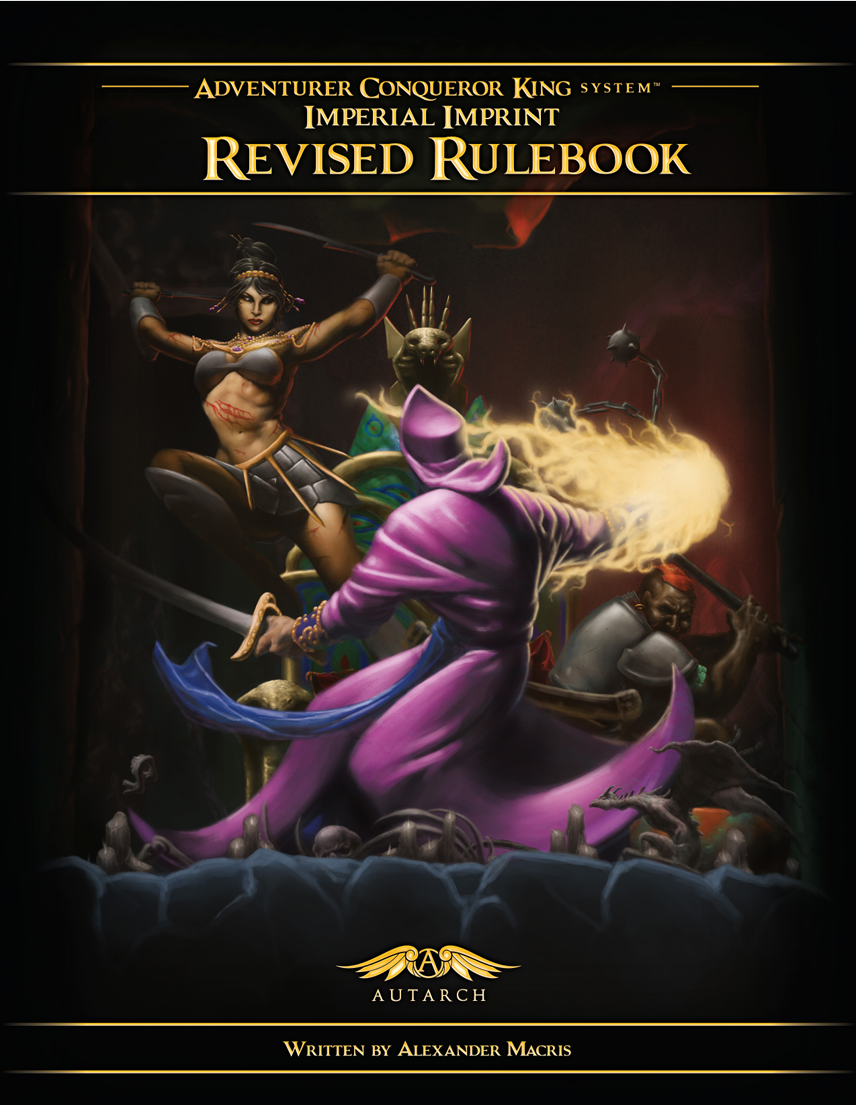
Marrying the Sword and Planet flavor of Warriors of the Red Planet (WotRP) with the heavy simulationist, domain-level architecture of ACKS II creates an incredible sandbox. You get the pulpy, high-adventure energy of Barsoom combined with the rigorous economic, logistical, and empire-building mechanics that make ACKS II legendary.
Because both systems are built on top of the classic B/X D&D foundation, they weld together surprisingly well. Here is how to detail that integration smoothly.
1. Character Classes & Archetypes
WotRP features four core classes tailored for planetary romance: the Fighting Man, Scoundrel, Scientist, and Mentalist. To bring them into ACKS II, we map their core competencies to the ACKS II class design framework, particularly scaling their Attack Throws, Saving Throws, and Hit Dice (HD).
The Fighting Man & Scoundrel: Treat these simply as reskinned versions of the ACKS II Fighter and Thief. Give them access to the standard ACKS II Combat and Thievery proficiencies, but tweak the flavor (e.g., Savage Resilience instead of Hardiness).
The Scientist: This replaces the Mage/Cleric utility role. In ACKS II terms, treat the Scientist as a custom campaign class using the Expert or Mage build chassis but replace spellcasting with Weird Science Gadgetry. Their "spells" are physical inventions that take time and gold to build in a laboratory, utilizing the Magic Research and Construct Construction rules from ACKS II Chapter 7.
The Mentalist: This is your psionic archetype. Instead of Vancian magic, they use a power-point or psychic strain system. In ACKS II, you can run them using the Warlock or a modified Mage framework, replacing verbal/somatic components with pure mental concentration, and styling their spell repertoire entirely as telepathy, telekinesis, and biokinesis.
2. Adapting the Proficiency System
ACKS II relies heavily on proficiencies to define a character's mechanical niche.
| ACKS II Base Proficiency | Red Planet Reskin / Variant | Campaign Function |
| Engineering | Radical Radium Engineering | Used for repairing ancient sky-galleys and maintaining atmospheric plants. |
| Beast Whacker / Riding | Thoat-Mastery | Grants bonuses to taming and fighting from the backs of multi-legged alien mounts. |
| Navigation | Dead Reckoning (Savage Skies) | Crucial for piloting airships across shifting, trackless desert wastes. |
| Alchemy | Alchemical Chemistry & Radium-Weaving | Used by Scientists to brew strange serums, rejuvenation fluids, or unstable explosives. |
3. Combat, Armor, and Radium Weapons
One of the iconic elements of Sword and Planet fiction is characters running around in harness/loincloths while wielding deadly radium rifles and longswords. ACKS II’s lethal combat system supports this beautifully if you make a few adjustments:
The Armor Paradox: In WotRP, heavy armor is rare or culturally disdained, but ACKS II math expects front-line fighters to have high Armor Class (AC). Implement a Swashbuckling AC Bonus or Agility Deflection rule: characters wearing light or no armor gain an AC bonus equal to their Dexterity modifier plus half their class level (maximum +6), representing active parrying and dodging in the thin air.
Radium & Blaster Weapons: Treat radium pistols and rifles as heavy crossbows or arbalests in terms of baseline damage, but give them the Armor Piercing trait (ignoring 2–3 points of physical armor) or treat them as Cleave-eligible missile weapons. To keep melee viable (as it is in the fiction), ammunition should be an incredibly scarce, non-replenishable resource managed closely via ACKS II encumbrance rules.
4. Sky-Galleys and the ACKS II Trade System
This is where the combination truly shines. WotRP gives you rules for airships, but ACKS II gives you a massive, functioning economic engine for Mercantile Ventures.
Airship Caravans: Replace the standard ACKS II Merchant Ships and Caravans tables with Sky-Galleys. Use the existing Arbitrage Trading and cargo transport rules verbatim, but adjust the movement speeds to account for aerial travel over desert rifts and dead sea beds.
Trade Goods: Swap out mundane fantasy trade goods for planetary variants:
5. Domain Phase: Forging a Red Empire
When characters hit 9th level in ACKS II, they transition from local adventurers to Kings and Conquerors. In a Red Planet setting, this fits perfectly with the trope of a displaced earthman or a rising warlord uniting fragmented tribes.
City-States vs. Nomads: Instead of feudal baronies, domains will take two primary forms:
Isolated Tech-Cities: High-infrastructure, dense urban strongholds centered around a vital resource like an atmospheric plant or an oasis well. Use ACKS II Urban Investment and Villages, Towns, and Cities rules.
Horde Domains: Nomadic encampments or tribal aggregations (like the Green Martians). Use the Chaotic Domains or Borderlands rules, where domain revenue is generated through raiding, tribute, and herding giant livestock rather than standard agricultural taxes.
Sinking Capitals into Infrastructure: Income generated from your domains can be directly funneled back into repairing ancient planetary infrastructure—such as commissioning canal projects or expanding a fleet of war-galleys to defend your borders from rival Building a custom class using the ACKS II Imperial Campaign Engine requires balancing trade-offs across the four main design axes: Fighting, Thievery, Divine, and Mage.
To create the Red Planet Scientist, we are going to use the Expert engine framework rather than giving them true magical power. Their "magic" is completely material—harnessed through blueprints, ancient tech-scraps, and unstable radium compounds.
Here is the complete mechanical breakdown and class template designed to plug directly into your ACKS II campaign.
The Red Planet Scientist
Prime Requisite: Intelligence
Requirements: None
Hit Dice: d4 per level (up to 9th level, then +1 HP per level)
Maximum Level: 14
Armor Allowance: Unarmored or padded/harness equivalent (Leather equivalent max, no shields).
Weapon Allowance: Club, dagger, garrote, hand axe, lasso, whip, and all Radium/Blaster weapons (pistols, carbines, rifles).
ACKS II Class Build Mechanics
To build this class under the hood, we allocated the 4 Build Points allowed for a baseline class:
Fighting 0: (0 points) d4 Hit Dice, Attack Throw 10+, narrow weapons, light armor.
Thievery 1: (1 point) 2 Thief skills (assigned to Hear Noise and Find Traps to represent sensory awareness and mechanism analysis).
Mage 0: (0 points) No spellcasting.
Expert 3: (3 points) 6 class abilities. We spend these on Weird Science Lab, Jury-Rig, Tech-Scavenging, Ancient Lore, and an accelerated Proficiency progression.
Class Abilities
1. Weird Science Laboratory (Magical Research Equivalent)
At 1st level, the Scientist can build, modify, or repair technological devices. This functions identically to the Magical Research rules in ACKS II Chapter 7, but uses Intelligence instead of Worksheet modifications for magical alignment.
Invention: They can create "Gadgets" that replicate the effects of arcane spells. To build a gadget, the Scientist must spend gold and time in a workshop. A 1st-level "Spell" gadget takes 1 week and costs 500gp in scrap components.
Activation: Gadgets require regular maintenance. A Scientist can safely carry and maintain a number of active gadget "Spell Levels" equal to their slots shown on the Progression Chart below.
2. Jury-Rig
Once per day per two class levels (round up), a Scientist can coax a broken, depleted, or malfunctioning piece of ancient technology (including vehicles like Sky-Galleys) into working for $1d6$ turns. This bypasses the need for a formal workshop or gold expenditure, but the item breaks permanently after the duration expires unless properly repaired later.
3. Tech-Scavenging
When searching ruins, dead cities, or downed sky-craft, a Scientist adds their class level to any proficiency checks made to scavenge functional components, radium cells, or raw technological scrap metal.
4. Ancient Lore
Scientists have spent lifetimes analyzing the fading glyphs of the red planet's past civilizations. This functions exactly like the Lore proficiency. On a throw of 18+, the Scientist can identify the purpose, history, and operation of an ancient artifact or historic location.
Progression & Tech-Crafting Chart
Level Experience Points Hit Dice Attack Throw Saving Throw General Prof. Class Prof. Max Invention Level Active Gadget Slots (By Level) 1 0 1d4 10+ 15+ 1 2 1st 1 2 1,250 2d4 10+ 15+ 1 2 1st 2 3 2,500 3d4 10+ 14+ 2 3 1st 2 / 1 4 5,000 4d4 9+ 14+ 2 3 2nd 3 / 2 5 10,000 5d4 9+ 13+ 2 4 2nd 3 / 2 / 1 6 20,000 6d4 9+ 13+ 3 4 3rd 4 / 3 / 2 7 40,000 7d4 8+ 12+ 3 5 3rd 4 / 3 / 2 / 1 8 80,000 8d4 8+ 12+ 3 5 4th 4 / 4 / 3 / 2 9 160,000 9d4 8+ 11+ 4 6 4th 5 / 4 / 3 / 2 / 1 10 280,000 +1 HP 7+ 11+ 4 6 5th 5 / 4 / 4 / 3 / 2 11 400,000 +2 HP 7+ 10+ 4 7 5th 5 / 5 / 4 / 3 / 2 / 1 12 520,000 +3 HP 7+ 10+ 5 7 5th 5 / 5 / 4 / 4 / 3 / 2 13 640,000 +4 HP 6+ 9+ 5 8 5th 5 / 5 / 5 / 4 / 3 / 2 / 1 14 760,000 +5 HP 6+ 9+ 5 8 5th 5 / 5 / 5 / 4 / 4 / 3 / 2 Note: Active Gadget Slots follow the standard ACKS II Mage spell progression shape, but represent physical items built and maintained by the Scientist.
Saving Throws
Level Blast & Breath Death & Poison Paralysis & Petrification Spells (Psychic/Weird Sci) Staffs & Wands 1–2 16+ 14+ 13+ 15+ 16+ 3–4 15+ 13+ 12+ 14+ 15+ 5–6 14+ 12+ 11+ 13+ 14+ 7–8 13+ 11+ 10+ 12+ 13+ 9–10 12+ 10+ 9+ 11+ 12+ 11–12 11+ 9+ 8+ 10+ 11+ 13–14 10+ 8+ 7+ 9+ 10+ Thief Skills Equivalent (Analysis Mechanics)
The Scientist gains access to two skills, calculated using their Intelligence modifier instead of Dexterity:
Find Traps / Analyze Machinery: Used to locate hidden mechanisms, pressure plates, or analyze security overrides on ancient vault doors.
Hear Noise / Sensor Sweeps: Used to pick up low-frequency vibrations, shifting sand-predators, or detecting the hum of active power cores through thick walls.
Level Find Traps / Analyze Machinery Hear Noise / Sensor Sweeps 1 14+ 18+ 2 13+ 17+ 3 11+ 15+ 4 9+ 13+ 5 7+ 11+ 6 5+ 9+ 7 3+ 7+ 8 2+ 5+ 9 1+ 4+ 10 1+ 3+ 11 1+ 2+ 12+ 1+ 1+ Scientist Class Proficiency List
When choosing class proficiencies, the Scientist selects from the following list:
Class Proficiencies: Alchemy (Chemical Synthetics), Ancient History, Craft (Weird Science), Cryptography, Engineering (Radium/Atmospheric), Healing, Knowledge (Planetary Geography), Language, Lip Reading, Mapping, Mechanics, Navigation, Signaling, Tracking.
Domain Level: The Laboratory-Citadel (Level 9+)
Upon reaching 9th level, a Scientist can construct a Laboratory-Citadel deep within the dead sea beds or anchoring an oasis city-state.
Attracting Apprentices: Instead of attracting traditional men-at-arms, a Scientist attracts a cabal of $1d4+1$ lower-level Scientists (levels 1–3) looking to study under their genius, along with $2d6$ mundane technicians and scavengers.
Industrial Production: The Scientist can now begin building Constructs (automata, tripods, combat drones) and staging long-term terraforming projects (like restoring an atmospheric plant) using the ACKS II domain investment infrastructure rules.
Building a Sky-Ship (or Sky-Galley) using Warriors of the Red Planet (WotRP) within the framework of ACKS II turns a simple vehicular purchase into a major logistical, engineering, and financial project.
In ACKS II, large construction projects are managed by the day, the gold piece, and the specialist labor required. Here is the step-by-step procedure to source, design, and build a Martian Skyship from laying the keel to taking flight.
1. Establish the Workshop & Sourcing Labor
You cannot build a radium-lofted hull in an ordinary medieval shipyard. A Scientist or Engineer needs specialized facilities.
The Sky-Yard: Requires a dedicated workshop space valued at a minimum of 25,000 gp (consisting of high-heat smelting forges, glass-blowing apparatuses for radium conduits, and lift-harness rigging).
The Work Force: Under ACKS II infrastructure rules, building large structures or vehicles progresses at a rate of 1 day per 500 gp of value.
To maximize efficiency, you need a crew of master shipwrights, specialized radium-smiths, and a supervising Scientist.
2. Blueprint Design Phase
Before a single frame is cut, the vessel must be drafted. A Scientist must spend time mapping out the hull's displacement, the lift capacity of the Radium-Levitation cores, and propulsion sail area.
Design Throw: The Scientist makes a Weird Science / Magical Research throw. The difficulty depends on the size of the ship (the hull's capacity measured in Stones of encumbrance).
Cost & Time: Blueprints cost 10% of the total target vehicle cost and require 1 week of isolation per hull size class.
3. Sky-Ship Hull Specifications & Costs
Below is the structural breakdown mapping the pulpy fliers of WotRP to the logistical hull profiles of ACKS II.
| Hull Type | WotRP Equivalent | ACKS II Chassis Base | Construction Cost | Cargo Capacity | Crew (Min/Max) | Structural HP |
| Light Scout | One-Man Flier | Launch / Skiff | 5,000 gp | 200 stone | 1 / 2 | 1d6+4 |
| Sky-Galleon | Reconnaissance Cruiser | Small Galley | 25,000 gp | 1,500 stone | 8 / 20 | 3d6+10 |
| Heavy Ether-Liner | Imperial War-Flier | Large Merchant Ship | 65,000 gp | 6,000 stone | 20 / 50 | 5d6+20 |
| Cloud-Leviathan | Dreadnought / Citadel | War Galley (Huge) | 120,000 gp | 12,000 stone | 50 / 150 | 8d6+40 |
4. Engineering Modifications (The "Weird Science" Plug-ins)
A standard wooden hull is useless without planetary romance tech. When assembling the ship, the Scientist must allocate gold from the total budget to install mandatory propulsion and flotation machinery:
A. Radium Levitation Core (Flotation)
Cost: 30% of the base hull cost.
Mechanic: Utilizes the planet's latent magnetic lines or localized anti-gravity rays to keep the ship aloft. Without an active core, the ship drops out of the sky.
B. Solar-Ether Sails or Radium Propellers
Cost: 20% of the base hull cost.
Mechanic: Dictates operational speed. Solar sails are fast in cloudless light but slow down in dust storms or during the planet's freezing nights; Radium Engines run consistently but require scarce fuel components.
C. Radium Disintegration Turrets (Artillery)
Cost: 5,000 gp per turret installment.
Mechanic: Functions as a heavy ballista/catapult hybrid in ACKS II structural combat, but deals Disintegration damage, ignoring mundane wood/metal armor values on enemy ships.
5. Construction Sequence
Building a mid-sized Sky-Galleon (Total Value: 35,000 gp including basic lift engines and weaponry) requires managing the production timeline:
Logistical Reality Check: Operating Costs
Once built, your sky-ship is an ongoing line-item in your kingdom management ledger. Under ACKS II domain rules, maintaining a complex vehicle requires paying a monthly upkeep equal to 1% of its total construction cost in spare parts, radium fluid, and specialist crew salaries. Fail to pay, and the vessel suffers cumulative structural degradation penalties.
To blend the grand structural scale of ACKS II ship warfare with the daring, swashbuckling boarding actions of Warriors of the Red Planet (WotRP), tactical combat splits into two parallel tracks: The Range Phase (naval maneuvering and artillery duels) and The Boarding Phase (skyside melee).
The goal here is to preserve the tactical weight of ACKS II's structural damage while ensuring a well-placed leap with a radium-sword can completely turn the tide.
1. The Tactical Engagement Round
Aerial combat uses a modified 1-minute round split into four distinct steps.
[1. Initiative] ──> [2. Helm & Maneuver] ──> [3. Radium Broadside] ──> [4. The Boarding Leap]
Step 1: Initiative
Roll $1d6$ per vessel, modified by the Helmsman’s Dexterity bonus or relevant proficiency (Navigation or Savage Skies Piloting).
Step 2: The Helm Phase (Maneuvering)
The winner of Initiative dictates the engagement bracket for the round. Ships operate in three abstract ranges:
Long Range: Only heavy radium artillery or long-range psychic attacks can find a target.
Short Range: Light blasters, small arms, and grappling anchors become viable.
Boarding Distance: The hulls are close enough that a character can leap across the open sky.
To close or widen the distance, the helmsman must make a Piloting Check versus the opposing helmsman. Winning allows you to shift the range by one bracket.
2. The Broadside Phase (ACKS II Structural Damage)
When firing ship-mounted weaponry, attackers roll to hit using the gunner's Attack Throw, but damage is dealt directly to the enemy ship's Structural Hit Points (sHP).
Mundane hand-weapons cannot damage a Sky-Ship hull; only vehicular artillery or specific weird-science gadgets can strip sHP.
| Weapon Type | Range Bracket | ACKS II Attack Throw | sHP Damage | Special Traits |
| Light Blaster Turret | Short Only | Gunner's Base | $1d4$ sHP | Accurate (+1 to hit) |
| Radium Disintegrator | Long / Short | Gunner's Base | $1d8$ sHP | Armor-Melting: Ignores hull plating. |
| Ether-Cutter Beam | Short Only | Gunner -2 | $2d6$ sHP | Breaching: Instantly creates a structural breach. |
The Critical Hull Breach (ACKS II Conversion)
Whenever a ship loses more than 25% of its total structural hit points in a single round, or drops below 0 sHP, roll on the Atmospheric Critical Table:
| 1d6 | Critical Effect | Mechanical Consequence |
| 1-2 | Hull Breach | A section of the deck shatters. $1d6$ random crew members must make a Paralysis saving throw or fall into the open sky. |
| 3-4 | Radium Line Leak | Glowing fuel pipes rupture. The deck becomes hazardous terrain; anyone entering the zone takes $1d6$ damage per round from radiation. |
| 5 | Engine Crippled | Flotation/propulsion drops by 50%. The ship automatically loses all initiative rolls for the remainder of the combat. |
| 6 | Catastrophic Core Vent | The radium core goes critical. The ship will explode or crash in $1d4$ rounds. Evacuate immediately. |
3. The Boarding Phase (WotRP Swashbuckling)
Once a helmsman successfully maneuvers the vessel into Boarding Distance, the engagement transitions from naval combat into an active dungeon/skyside encounter.
[ YOUR SKY-SHIP ]
| | (Grappling Anchors Locked)
V V
~ ~ ~ [ THE OPEN ABYSS ] ~ ~ ~
^ ^
| | (The Boarding Leap / Swing)
[ ENEMY SKY-GALLEY ]
Securing the Hold: Grappling
Before boarding, a ship must lock the target in place. Crew members use light ballistas to fire Harpoon Anchors.
Roll: Standard Attack Throw against the enemy ship's base Armor Class.
Requirement: It takes at least two secured grappling lines to prevent a rival helmsman from using the Helm Phase to break away into Short Range.
The Boarding Leap
Characters jumping across the gap from one moving sky-vessel to another must brave the thin Martian air. This is handled via a Strength or Dexterity Saving Throw (Player's choice, representing brute athletic power vs. precise timing).
Success: The character lands dramatically on the enemy deck, ready to fight. They may take their regular combat action immediately.
Failure: The leap was mistimed. The character misses the deck but catches themselves on the safety rigging, hanging over the drop. They are considered Helpless and lose their turn while climbing up.
Failure by 5 or more: The character plummets into the dead sea beds below unless a companion uses an immediate reaction or psychic ability to catch them.
4. Resolving Mass Crew Clashes
While your player characters are hunting down the enemy Jeddak or Scientist on the main deck, the rest of the crew is engaged in a chaotic melee. Rather than rolling for fifty individual sailors, use the ACKS II Battle Group Mechanics condensed for the deck space:
Every 10 Crew Members form a single Combat Unit.
Calculate the unit’s total Hit Dice based on their average level (e.g., 10 Level-1 Fighting Men = a 10 HD Unit).
Each round during the boarding phase, the units trade attacks. For every 1 HD of damage a unit takes, one crew member falls overboard or is slain.
If a crew unit's morale breaks (using standard ACKS II Morale Throws), they throw down their radium blades and surrender the vessel.
The Capture Objective
In a Sword and Planet campaign, sinking a ship is usually a massive waste of resources. The primary goal is almost always to preserve the hull while eliminating the steering crew. Stripping a ship to 0 sHP forces a crash landing, but executing a flawless boarding action preserves a fully functional Sky-Galley worth tens of thousands of gold pieces for your player's growing empire.