Did you ever wonder about this Gamma World Cover?
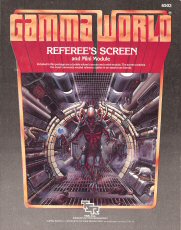
The 8 page mini-module "The Albuquerque Starport."
The mini module is pretty good. You have to fill in lots of little details, but the framework is pretty solid. At the end the characters can have a neat base, but good luck holding it... I used it as a jump for several orbital adventures, and the group loves to go back and interact with the surviving robots. If you can still find an intact copy, it is definitely worth it regardless of the version you currently play. One of the technologies I've had "issues" with is adapting the space craft to match some of the ideas presented in
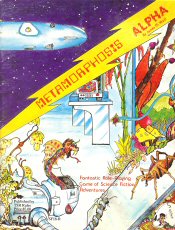
& Mutant Future as well as the star port & the space station.
Then today I read this article on Dark Roasted Blend & decided to share it with you folks.
The Ultimate 1950s Space Technology, which almost made it to Saturn
Obviously, "almost" is a key word here, but apparently NASA still has "small secret contingency plan division" which is dedicated to preserving "Orion" nuclear propulsion technology - and reviving it in case of a killer asteroid threat.
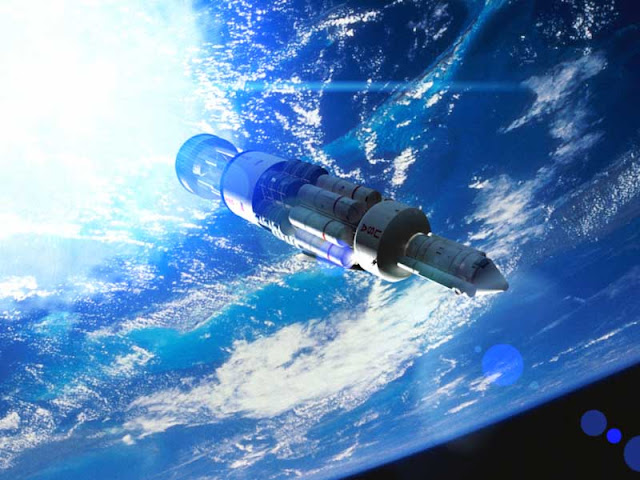
(image credit: Adrian Mann)
So what exactly is this "Project Orion" - the most radical propulsion technology for kick-ass space missions? No, it's not the NASA's future space capsule ("Apollo-on-steroids", some may say) - but a proposed colossal nuclear-bomb-powered rocket from 1958:
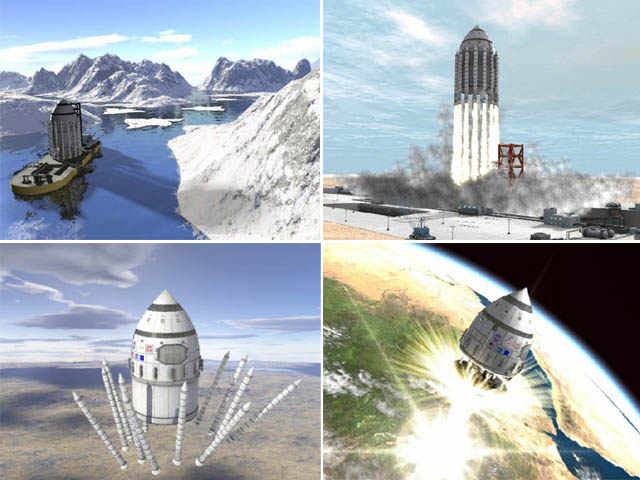
(images by Rhys Taylor, see the full animation of "Orion" launch here)
Nuclear Propulsion: Getting More Miles Per Gallon
... or rather, giving you maximum payload per launch:


(image credit: NASA)
The ultimate BIG technology, conceived in the 1950s to go to Saturn, Jupiter, and beyond... was powered by a row upon row of controlled, directed nuclear blasts....

(Collection of George Dyson)
Here is a hugely entertaining talk video by George Dyson about the development and the current state of Project Orion:
Maybe somebody is already building it, in the remote Canadian Rockies
With a mass of 1000-2000 metric tons and 1000 nuclear bombs for propulsion the medium version alone would have been a terrifying monster. The "super" Orion design at 8 million tons could easily be the size of a small city. Here is a size comparison of some of the proposed versions:

(image credit: Selden)

As a side note, we should also mention project "Aldebaran" (1962) - immense nuclear-pulse sea-launch vehicle:
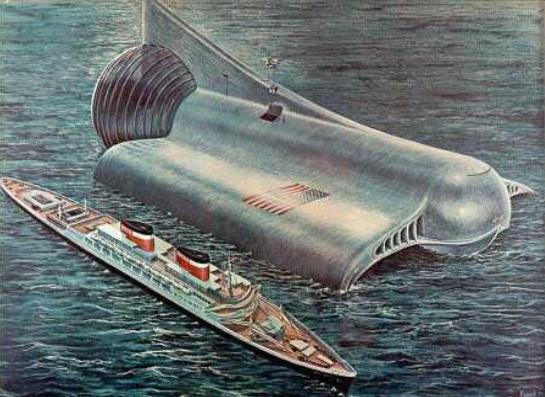
(image credit: astronautix)
Another US Air Force project from the 1960s - Project Pluto - nuclear powered cruise missiles (SLAM):


To the stars - one nuke at a time!
Various mission profiles for "Orion" were considered, including an ambitious interstellar version (asteroid defense and mining were among other ideas). This called for a 40-million-ton spacecraft to be powered by the sequential release of ten million bombs, each designed to explode roughly 60 m to the vehicle's rear.
Here are some visualizations:


(top image by Rhys Taylor)
The Partial Test Ban Treaty of 1963 effectively killed the project, after $11 million had been spent on its development over nearly seven years. These are the screenshots from top secret video, showing the tests:

(Collection of George Dyson)
What!? You wanna put 1000 nuclear explosions behind my back?

So, why it's not exactly the safest way to travel? Among other obvious things:
- the ship could explode on the launch pad, or before reaching orbit, endangering whole areas on Earth.
- the radiation levels for the space pilots were pretty significant.
- the people in Miami looking up and seeing this ship taking off could get eye burns (which gives you an idea how bright it might be)

(image via)
Classified... declassified... and RE-classified!
Parts of this project still seem to be classified today. George Dyson recollects: "NASA had no interest, they tried to kill the project. The people who supported it were the Air Force, so they made it top secret..." It is still very dangerous and touchy subject, mostly because of the heart of the project - controlled ways to get directed energy explosions, and directing nuclear explosions at the ship.

Unpublished documents - a set on Flickr. Tech historian George Dyson collected these papers, written a book"Project Orion", which chronicles the project and the lives of the scientists behind it - including his father,Freeman Dyson (remember the Dyson' Sphere?).

Arabic printing of the book, which says "Declassified" on the cover:
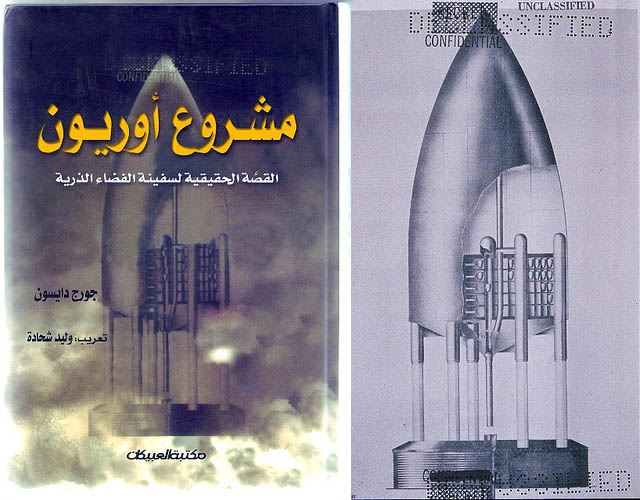
(Collection of George Dyson, image via, more info)
Orion's Possible Rebirth
The leading scientists of this project were actually planning to go into space on this monster, taking their kids with them. On the surface, this project appears to be killed (although parts of it live on in a strange ways)...
"But hey, it does make more sense than the space shuttle, so things are looking up", says George Dyson.

(Orion Nebula - image by NASA)
Article by Avi Abrams, based on material compiled by Bernd Missal. Additional reading and reference: 1, 2, 3
Please note you can read the whole article right Here. The Orion option allows a Dungeon Master to map out an inter system game without actually giving the players the Enterprise. The Omega Project can be adapted to earlier editions while giving that great intergalactic spin to Mutant Future or Gamma World. Never heard of the Omega Project? Well according to Wayne's Books Site its - Omega Project (Module GW11)
TSR abandoned 3rd edition Gamma World before the last module could be published, leaving the climax of the last 5 adventures missing. Les Braun, a long-time Gamma World fan, wrote this excellent conclusion to the series: GW11 -- Omega Project.
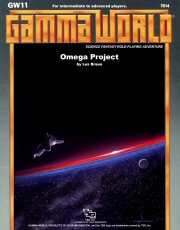
You can download that module right Here


