Combining Castles & Crusades (C&C) and Swords & Wizardry (S&W) is one of the easiest cross-system integrations in the Old School Renaissance (OSR) space. Both games are rooted in early editions of Dungeons & Dragons (OD&D and AD&D) and share near-identical core mechanics.
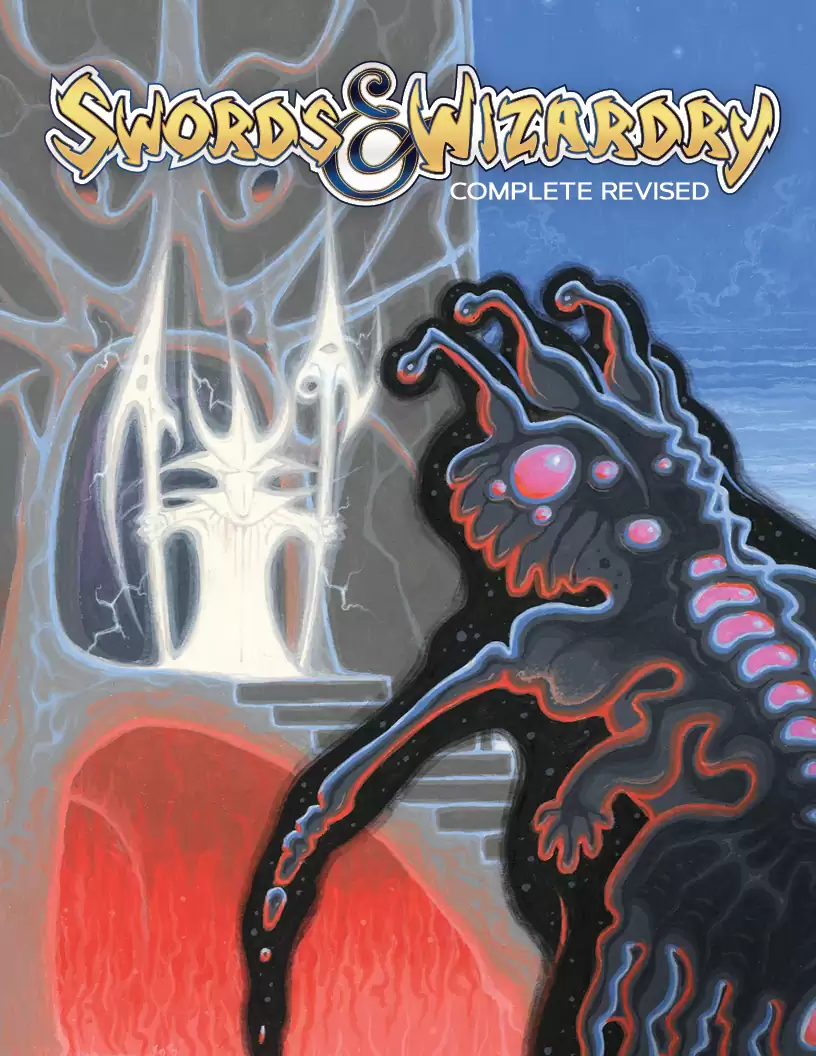
Integrating the two gives you the best of both worlds: S&W’s lean, flexible retro-clone content and C&C’s clean, unified SIEGE Engine task-resolution system.

Core System Differences at a Glance
| Feature | Castles & Crusades | Swords & Wizardry |
| Task Resolution | SIEGE Engine (d20 + level + modifier vs. Target Number 12 or 18) | Single-d20 checks, d6 hazard rolls, or GM rulings |
| Armor Class | Ascending AC (10 + Armor) | Ascending or Descending (varies by printing, usually Ascending default) |
| Saving Throws | Attribute-based saves using the SIEGE Engine | Single unified Saving Throw number |
| Monster Stats | HD, Hit Points, AC, Movement, Attacks, Special Abilities | HD, AC, Movement, Attacks, Saving Throw, Special |
1. Mechanics & Task Resolution (The SIEGE Engine)
The easiest hybrid framework uses C&C’s SIEGE Engine as the mechanical engine and S&W as the source content repository.
Base Mechanics: Keep C&C’s Primary vs. Secondary Attributes.
Primary Attributes have a Base Challenge Class (CC) of 12.
Secondary Attributes have a Base Challenge Class (CC) of 18.
Target Number = Base CC + Challenge Degree (difficulty or target’s HD/level).
Skills & Non-Combat Tasks: When an S&W module calls for a thief skill or general check (e.g., listening at doors, searching, climbing), use C&C’s SIEGE check:
$$\text{d20} + \text{Attribute Mod} + \text{Level} \ge \text{Target Number}$$
2. Converting Saving Throws
S&W uses a single unified saving throw number (e.g., a 1st-level Fighter saves on a 14+), while C&C uses SIEGE checks tied to specific attributes (Strength for poison/paralysis, Dexterity for breath weapons/traps, Wisdom for mental spells, etc.).
How to Convert S&W Saves to C&C
Identify the effect causing the save (e.g., Fireball, Poison, Charm).
Assign the relevant C&C Attribute:
Strength: Physical restraint, crushing, forced movement.
Dexterity: Traps, dragon breath, area-of-effect dodge.
Constitution: Poison, disease, drain, endurance.
Intelligence: Illusion, psychic attacks, mental confusion.
Wisdom: Charms, fear, holy/unholy magic, perception.
Charisma: Banishment, possession, social/pact magic.
Have the character roll a standard SIEGE check against the caster’s Level/HD as the Challenge Degree.
3. Monster & Encounter Compatibility
S&W monsters are virtually 100% plug-and-play in C&C with minor adjustments:
Hit Dice & Attack Bonus: In both systems, a monster’s Hit Dice equal its base attack bonus/level equivalent.
Armor Class: Ensure both use Ascending AC.
If using older S&W material with Descending AC (DAC):
$$\text{Ascending AC} = 19 - \text{Descending AC}$$
Special Abilities & SIEGE Checks: If an S&W monster forces a special roll, turn it into a C&C SIEGE save using the monster’s HD as the Challenge Degree added to the Base CC (12 or 18).
4. Spells & Magic Items
Spell Levels: S&W spells translate directly into C&C spell slots. S&W’s magic is slightly lighter and less codified, which fits C&C well.
Spell DC: If an S&W spell forces a save, use the caster's level as the Challenge Degree for the target's SIEGE check.
Magic Items: S&W magic items can be used in C&C without alteration. Variable bonuses (+1 to +3) function identically in both systems.
Recommended Blending Approaches
"C&C Core + S&W Adventure Modules" (Most Popular):
Run C&C rules exactly as written.
Run S&W adventure modules (e.g., Rappan Athuk, Tomb of Abysthor) straight off the page without prepping conversions in advance.
"S&W Style + C&C Class/Race Separation":
Use S&W for fast, lightweight combat and single-save simplicity.
Import C&C’s race and class structure to give players more distinct character options and primary attribute choices.

No comments:
Post a Comment
Note: Only a member of this blog may post a comment.